AI Patio Design
A patio is the room you build outdoors, where furniture has to face the weather and the floor is whatever the sky decides. InteriorLab helps you plan it before you spend a dollar.


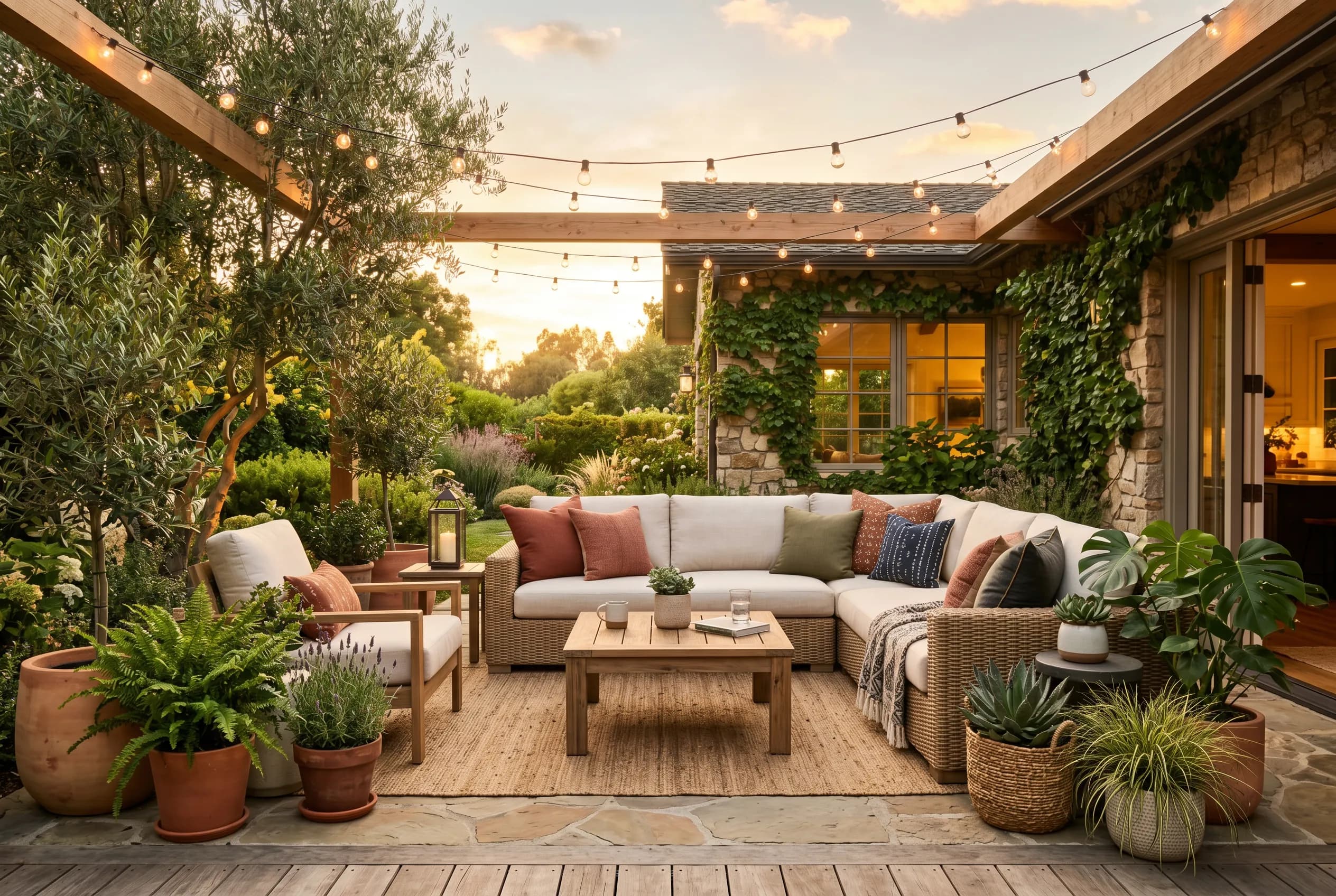
A patio sits between architecture and garden, and it works best when it borrows from both. The hard surface, whether poured concrete, brick, flagstone, or composite decking, sets the tone, and everything you place on it has to earn its spot against sun, rain, and temperature swings. Good patio design treats the space as an actual room: a defined floor, a sense of enclosure, somewhere to sit, somewhere to set a drink, and a reason to stay after dark. The goal is for the outdoor space to feel as deliberate as the rooms inside, not like leftover ground with a grill on it.
Layout on a patio comes down to how you want to use it. A dining patio centers on a table sized to the space, with clearance to pull chairs out without hitting a planter or railing. A lounge patio leans on a sofa or a pair of deep chairs angled around a low table or a fire pit. Many patios do both, splitting the area into a cooking-and-eating zone and a softer sitting zone, with an outdoor rug or a change in planting to draw the line between them. Shade, whether from a pergola, umbrella, or a tree, decides where people actually sit, so it pays to plan the furniture around it rather than the other way around.
Common Patio Design Challenges
Weather and material durability
Everything outside takes a beating from UV, rain, and heat, so finishes that look great indoors fade, warp, or rust fast. Patios need teak, powder-coated aluminum, all-weather wicker, and solution-dyed fabrics built to live outdoors.
Defining the space
Without walls, a patio can read as an unfinished slab rather than a room. An outdoor rug, a pergola overhead, or a low planter wall gives the area edges and a sense of enclosure that furniture alone cannot.
Sun, shade, and glare
Light shifts across the day, and a spot that is perfect at breakfast can be unbearable by mid-afternoon. Reading the sun path and placing shade and seating accordingly is the difference between a patio you use and one you avoid.
Connecting indoors to out
A patio that ignores the room it opens off of feels disconnected. Echoing interior colors, materials, or sightlines makes the threshold disappear so the two spaces read as one continuous living area.
Redesign Your Patio With AI
Snap a photo of your patio, or scan it with LiDAR, and pick a style from the 19 options in InteriorLab. The AI redesigns the space in seconds, restyling the surface, dropping in weather-ready furniture, adding planting and overhead shade, and warming the scene with string lights or lanterns for evening. If one element feels wrong, highlight it to recolor or replace it, or use Magic Erase to clear an old grill or a tired umbrella. Rearrange existing pieces into a new layout without buying anything, and when you settle on a lounge set or dining table, Furniture Fit previews it in AR at real scale on your actual patio before you order. Shop the Room links many pieces to real products, and the Budget Planner finds combinations that fit what you want to spend.
Patio Design Tips
Lay a real floor with an outdoor rug
A flat-weave polypropylene rug instantly turns a bare slab into a defined room and anchors the seating. Choose one large enough that the front legs of every chair sit on it, which visually pulls the furniture into a single group rather than leaving pieces stranded.
Light it for the hours you will actually use it
Patios get the most use after the sun drops, so plan lighting before furniture. Layer warm string lights overhead with a lantern or two at table height and a portable light near steps. Aim for soft pools of light rather than one bright flood, which keeps the mood relaxed and the bugs less drawn in.
Soften the hardscape with plants at three heights
Bare paving feels stark, so build greenery in layers: a tree or tall grasses for height, mid-size shrubs or potted olives at eye level, and trailing plants or herbs spilling over container edges. The vertical range makes even a small patio feel lush and lived-in.
Patio Design FAQs
What furniture materials hold up best on a patio?
Teak is the classic choice because it weathers to a silver patina and resists rot, while powder-coated aluminum stays light and rust-free. All-weather resin wicker handles sun and rain well, and cushions should use solution-dyed acrylic fabric like Sunbrella, which holds color far longer than standard outdoor textiles. Avoid untreated softwoods and uncoated iron, which warp and rust within a season or two.
How do I make a small patio feel bigger?
Use furniture scaled to the space rather than oversized lounge sets, and choose pieces with visible legs and open frames so light passes through and the floor stays in view. A single large outdoor rug, a vertical garden or trellis on a wall, and a limited color palette all make a compact patio read as larger and calmer. Built-in or folding seating along the edges also frees up the center.
What is the best way to add shade to a patio?
It depends on permanence and budget. A cantilever umbrella is movable and good for following the sun, while a pergola gives architectural structure and can carry climbing plants or a retractable canopy. Sail shades are inexpensive and modern, and a well-placed tree offers the most natural cooling. Map where the sun hits in the afternoon and put your shade there, not necessarily over the center of the patio.
Can InteriorLab redesign a patio from just a phone photo?
Yes. Take a photo of your patio in daylight, ideally showing the full seating area and the surface, and the AI redesigns it in seconds. You can try different styles, swap individual pieces, add planting and lighting, and preview real furniture in AR with Furniture Fit before committing. It works whether you are starting with a bare slab or reworking a patio you already furnished.
Redesign another room
Redesign your patio today
Download InteriorLab free and see your new space in seconds with AI.