AI Dining Room Design
The table is the anchor, but a dining room is really about everything around it: the light overhead, the chairs you actually want to linger in, and the path you take to sit down. Get those right and the room earns its square footage.


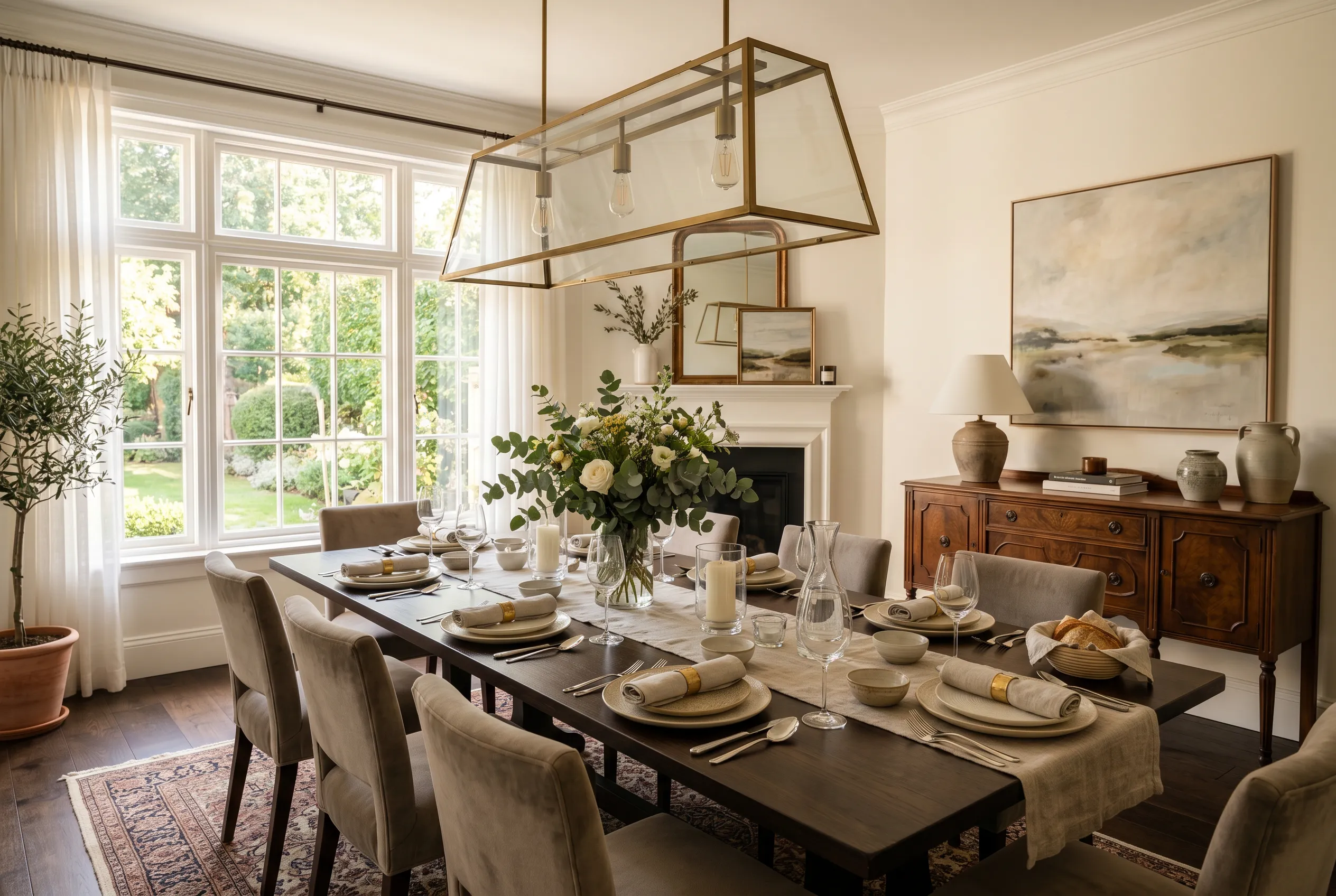
A dining room is a room organized around a single piece of furniture and a single ritual. The table sets the scale, the chairs set the comfort, and the lighting sets whether dinner feels like a quick refuel or a reason to stay an extra hour. Because the function is so focused, the design choices are unusually visible. A table that is six inches too long for the room, or a fixture hung at the wrong height, throws off the whole space in a way a sofa never could.
Function here comes down to circulation and proportion. You want roughly 36 to 42 inches of clearance between the table edge and the nearest wall or sideboard so chairs can pull out and people can walk behind seated guests. A rug, if you use one, should be large enough that the back legs of every chair stay on it when pulled out. The room also tends to do double duty, hosting homework, paperwork, and laptops on weekdays, so storage in a sideboard or hutch quietly earns its keep.
Common Dining Room Design Challenges
Sizing the table to the room
Too large and the chairs scrape the walls; too small and the space feels unfurnished. The table footprint plus clearance, not the table alone, is what has to fit.
Lighting at the right height
A pendant or chandelier hung too high washes out the table, and one hung too low blocks sightlines. The sweet spot is roughly 30 to 34 inches above the tabletop.
Rooms that pull double duty
When the dining table is also the home office and craft station, the room needs storage and surfaces that switch jobs without looking like clutter at dinner.
Hard surfaces and echo
Wood floors, a glass table, and bare walls make a dining room loud and unwelcoming. Soft layers like a rug, drapery, and upholstered chairs absorb sound and warm the acoustics.
Redesign Your Dining Room With AI
With InteriorLab, redesigning a dining room starts with one photo of the space, or a LiDAR scan if your device has it. Pick from 19 styles and the AI restyles the whole room in seconds, swapping in a new table, chairs, lighting, and rug while holding your real walls and windows in place. From there you can edit one element at a time: highlight the chairs to recolor or replace them, Magic Erase a bulky hutch you have outgrown, or try a fresh layout that rotates the table to open up the walkway. Furniture Fit lets you preview a real pendant or a specific dining set in AR at true scale before you commit, and Shop the Room links many of the pieces in your redesign to products you can actually buy.
Dining Room Design Tips
Buy the chairs for the long dinners
People remember whether they wanted to leave the table or stay. Choose chairs with real lumbar support and a seat height that leaves about 10 to 12 inches between the seat and the underside of the table. Upholstered or armed chairs at the ends signal that lingering is encouraged.
Hang the light to the table, not the ceiling
Center the fixture over the table rather than the room, and size it to roughly one half to two thirds the width of the tabletop. Put it on a dimmer so the same room handles homework at full brightness and dinner at a glow.
Anchor the set with a rug that fits the pull-out
Measure your table, then add at least 24 inches on every side so chairs stay on the rug when pushed back. A flat-weave or low-pile rug is far easier to sweep crumbs from than a deep shag, which matters more in a dining room than anywhere else.
Best Styles for a Dining Room
Dining Room Design FAQs
How big should a dining room rug be?
Measure the table footprint and add at least 24 inches on all sides so the back legs of pulled-out chairs stay on the rug. For a standard six-seat table, that usually means an 8-by-10-foot rug at minimum. In InteriorLab you can swap rug sizes and styles on your own room photo to see the proportions before buying.
What is the right height to hang a dining room light fixture?
Hang a pendant or chandelier so the bottom sits about 30 to 34 inches above the tabletop, raising it slightly for higher ceilings. That keeps the light effective without blocking the view across the table. You can preview a specific fixture at true scale in your room with Furniture Fit in AR.
How do I design a dining room that doubles as a workspace?
Lean on a table with a durable, wipeable top and pair it with a sideboard or hutch that hides laptops, chargers, and paperwork at the end of the day. Good task lighting on a dimmer covers both jobs. InteriorLab can restyle the room and add storage pieces so the dual function does not read as clutter.
Which dining table shape works best for a small dining room?
Round and oval tables ease tight rooms because they have no sharp corners and let people squeeze around them more easily, while a narrow rectangular table suits a long, slim space. Try both shapes on your actual room in InteriorLab with the rearrange-layout tool before you decide.
Redesign another room
Redesign your dining room today
Download InteriorLab free and see your new space in seconds with AI.