Japandi Interior Design
Japandi is where the quiet discipline of Japanese design meets the soft, functional comfort of Scandinavia. The result is a room that feels still, grounded, and unhurried.


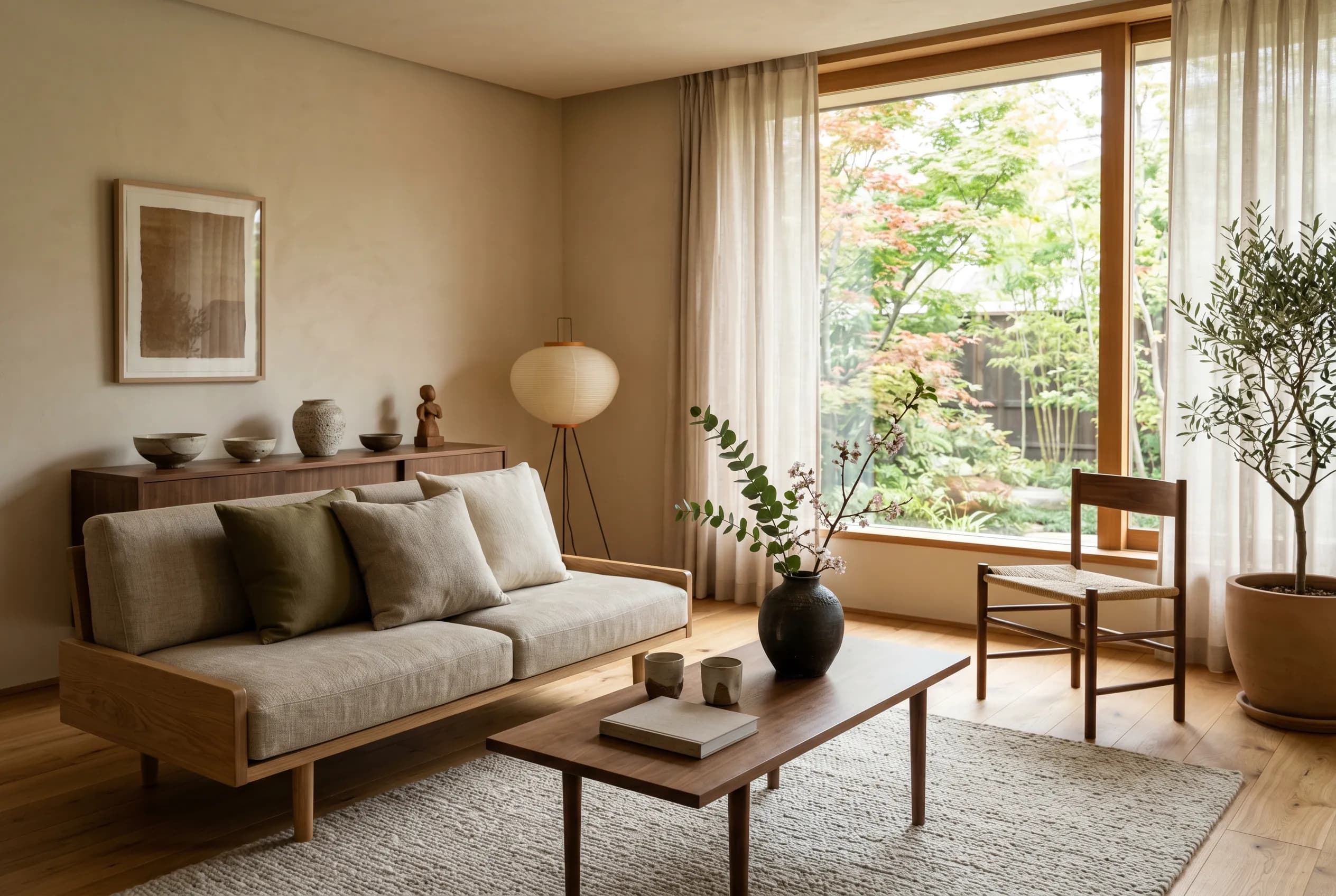
Japandi pairs two philosophies that share more than they differ. From Japan it borrows wabi-sabi, the appreciation of imperfection and natural aging, along with a respect for craft and negative space. From Scandinavia it takes hygge, light woods, and a focus on everyday comfort. Together they make rooms that are pared back without feeling cold.
Living with Japandi means fewer objects, but better ones. Surfaces stay clear, color stays muted, and every piece earns its place. It suits people who want calm at home rather than spectacle, and it works best in spaces with decent natural light and room to breathe between the furniture.
Japandi is a recent hybrid, named in the 2010s, but its roots run deep. Scandinavian and Japanese designers have admired each other for over a century, and the overlap is no accident. Danish furniture makers of the mid-1900s, including Finn Juhl and Hans Wegner, openly studied Japanese joinery and proportion. Wegner's 1949 Wishbone Chair drew directly on Ming-dynasty chairs he saw in photographs, which is why the two traditions sit together so naturally.
What Defines Japandi Design
Restraint over abundance
Rooms are intentionally sparse, with empty space treated as a design element rather than something to fill. Clutter is the enemy.
Warm and cool woods together
Pale Scandinavian timbers like ash and oak are balanced against darker Japanese-leaning woods such as walnut, creating contrast without noise.
Low, grounded furniture
Pieces sit close to the floor, echoing Japanese living, with clean horizontal lines that keep sightlines open.
Matte, tactile finishes
Nothing glossy. Surfaces are honest and a little raw, from unlacquered wood to stone and rough ceramic.
Muted, earthy color
A narrow palette of off-whites, greiges, soft black, and natural clay tones keeps the mood quiet.
Handmade detail
A single imperfect ceramic vessel or a hand-thrown bowl carries more weight than a shelf of matching decor.
Japandi Color Palette
Warm Oat
#E8E1D4
Greige
#B5ADA0
Clay Brown
#9A7B5F
Walnut
#5A4636
Sumi Black
#2B2926
Signature Materials
- Light oak and ash
- Walnut and other dark woods
- Natural linen and cotton
- Bamboo and rattan
- Unglazed and matte ceramics
- Paper and rice-paper screens
- Cast iron and blackened steel
- Rough stone and plaster
Pieces That Define It
- Low platform or tatami-style bed
- Spindle-back dining chairs
- Floor cushions and a low coffee table
- Open wooden shelving with breathing room
- Noren curtains or shoji-style screens
- A single hand-thrown ceramic vase
- Woven floor or hanging lamp in paper or rattan
Get a Japandi Room in Seconds
Open InteriorLab, snap a photo of your room or LiDAR-scan it, and choose Japandi from the 19 styles. The AI redesigns the space in seconds, blending light wood, muted color, and low furniture into your actual layout. If a piece feels off, highlight it to swap, recolor, or remove it with Magic Erase. Then use Furniture Fit to place a real low-slung chair or oak shelf in your room in AR before you commit, and Shop the Room to buy the pieces that bring the look together.
Tips for Nailing the Japandi Look
Edit before you add
Japandi lives or dies on restraint. Clear the surfaces first, then reintroduce only the objects you genuinely use or love. Empty space is the point, not a gap to fill.
Balance the wood tones
Pair one pale wood with one darker one so the room reads warm and grounded rather than flat. A blond oak floor with a walnut table is a reliable starting point.
Let one handmade piece lead
Choose a single imperfect ceramic, a rough linen throw, or a hand-woven basket as the focal texture. Wabi-sabi rewards the slightly uneven over the showroom-perfect.
Best Rooms for Japandi Style
Japandi Design FAQs
What is the difference between Japandi and minimalism?
Pure minimalism can feel clinical, all hard edges and white walls. Japandi softens that with warm woods, natural textiles, and handmade imperfection. It keeps the discipline of minimalism but adds the comfort and warmth of a lived-in home.
What colors work best for a Japandi room?
Stick to a tight, earthy palette: warm off-whites and oat, greige, clay and terracotta browns, and a grounding soft black. These muted tones keep the room calm and let natural materials do the talking. Avoid bright or saturated accents.
Does Japandi work in a small apartment?
Yes, it is one of the best styles for small spaces. Low furniture keeps ceilings feeling tall, the light palette opens the room up, and the emphasis on owning fewer things suits tight square footage. A studio apartment in Japandi can feel serene rather than cramped.
Is Japandi the same as wabi-sabi?
Not quite. Wabi-sabi is the Japanese philosophy of finding beauty in imperfection and impermanence, and it is one of the ideas Japandi draws on. Japandi is the broader interior style that combines that mindset with Scandinavian function, light, and comfort.
Explore related styles
Design your space in Japandi style
Download InteriorLab free and redesign any room with AI in seconds.