Cozy Interior Design
Cozy design is the art of making a room want to hold onto you. Low light, soft layers, and furniture you can sink into turn an ordinary space into somewhere you actually want to stay.


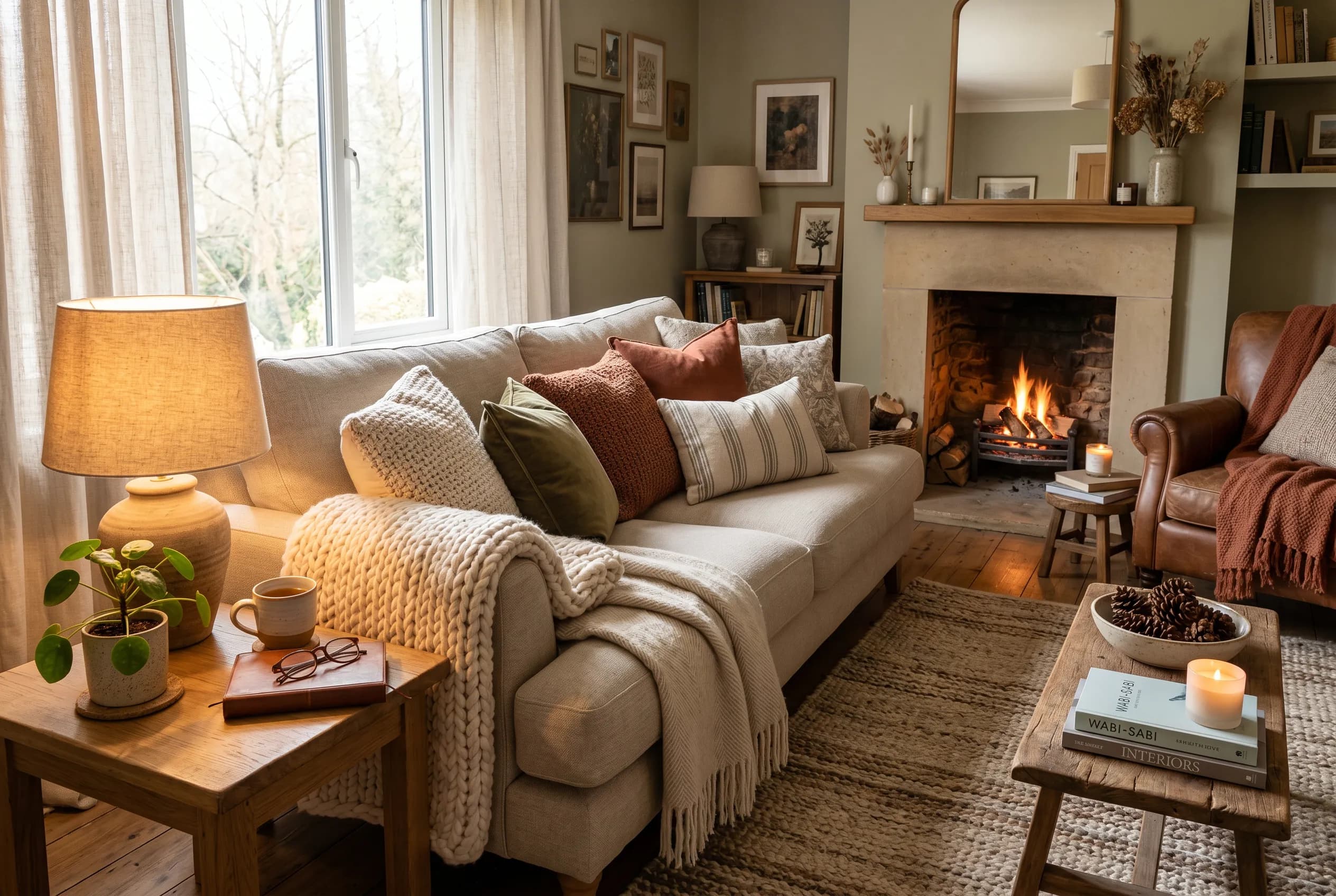
Cozy is less a fixed look than a feeling engineered on purpose. It works through warmth and softness: deep upholstered seating, layered textiles, pools of low light, and a palette that stays warm rather than cool. Surfaces are touchable, corners are softened, and the room is sized to the body rather than to a magazine spread. The goal is comfort you can sense the moment you walk in.
What separates Cozy from simply cluttered is intent. A cozy room is layered, not crammed, and every blanket, lamp, and cushion is there to invite you to settle. It forgives small rooms, awkward nooks, and older homes, because intimacy is the asset and scale is not. If you tend to read in a chair, host long dinners, or just want a space that softens a hard day, this is the style built for that.
Cozy draws directly from the Danish idea of hygge, the sense of contented warmth that runs through Nordic homes during long, dark winters, and from the British notion of snugness with its inglenooks and reading chairs pulled close to the fire. Both traditions treat comfort as a design goal in its own right, not a happy accident. The aesthetic gained a fresh wave of attention in the late 2010s as remote life pushed people to make their interiors feel more sheltering, but its roots are far older than the trend.
What Defines Cozy Design
Warm, soft lighting
Light comes from many low sources rather than one harsh ceiling fixture. Table lamps, candles, and warm bulbs around 2700K create pools of glow instead of flat brightness.
Layered textiles
Throws, cushions, rugs, and curtains pile up in different weaves and weights. The mix of wool, knit, and velvet gives the eye and the hand something to settle into.
Deep, inviting seating
Sofas and chairs are plush and overstuffed, made for sinking in rather than perching. Rounded arms and generous cushions signal comfort before anything else.
Warm, muted palette
Colors lean toward amber, terracotta, ochre, and warm browns, with few cold tones. The whole scheme reads like firelight rather than daylight.
Intimate scale
Furniture is grouped close together to draw people in. Small rooms and tucked-away nooks are an advantage here, not a problem to solve.
Personal, lived-in layers
Books, candles, ceramics, and worn favorites are part of the look. The room feels inhabited rather than staged, with traces of real life on the surfaces.
Cozy Color Palette
Warm Cream
#EBE0D0
Toasted Caramel
#B07B4F
Burnt Ochre
#C28840
Soft Terracotta
#B5654A
Espresso Brown
#3E2F25
Signature Materials
- Chunky knit and wool throws
- Velvet and brushed cotton upholstery
- Soft pile and shag rugs
- Warm-toned oak and walnut
- Linen and flannel
- Sheepskin and faux fur
- Aged brass and warm metals
- Hand-thrown ceramic and stoneware
Pieces That Define It
- Deep overstuffed sofa with rounded arms
- Reading chair with a footstool and floor lamp
- Chunky knit throw draped within reach
- Layered area rugs over a warm floor
- Cluster of warm table and accent lamps
- Candle grouping on a low wooden table
- Full, lined curtains that pool at the floor
Get a Cozy Room in Seconds
Start by snapping a photo of your room, or scan it with LiDAR if your device supports it, then choose Cozy from the 19 styles in InteriorLab. The AI restyles the whole space in seconds, layering in soft textiles, warmer lighting, and deeper seating while keeping your real walls and windows in place. From there you can refine the details: highlight a stiff sofa to swap it for a plush one, recolor cool gray walls toward warm cream, or Magic Erase a harsh overhead fixture. Use Furniture Fit to preview a real reading chair in your room through AR, and tap pieces in the design to Shop the Room when a knit throw or brass lamp catches your eye.
Tips for Nailing the Cozy Look
Light low and warm, never overhead
Switch the single bright ceiling light for several smaller sources at different heights: a floor lamp, a couple of table lamps, and a few candles. Use warm bulbs around 2700K. Layered low light is the fastest way to make a room feel cozy rather than clinical.
Build texture in odd numbers
Pile on layers you can feel, but vary the weave so it does not read as one flat fabric. A chunky knit throw, a smooth velvet cushion, and a shaggy rug together create the depth that makes Cozy work. Three different textures usually beats a matched set.
Pull the furniture inward
Resist pushing every piece against the walls. Floating a sofa and chair closer together around a small table creates the intimate, conversational grouping that cozy rooms depend on. Even a tight space feels warmer when the seating draws people toward each other.
Best Rooms for Cozy Style
Cozy Design FAQs
What is the difference between cozy and hygge design?
They overlap heavily, but hygge is the Danish concept of warm, contented well-being, while Cozy is the broader interior style that puts that feeling to work. Hygge leans Scandinavian and pale, with candles and sheepskin over light wood. Cozy can run warmer and darker, pulling in amber tones, deep seating, and richer textiles regardless of region.
Can a small apartment pull off cozy style?
Small spaces are where Cozy shines. Intimacy is the whole point, so a tight footprint works in your favor rather than against it. Keep the palette warm, add layered low lighting, and group a few plush pieces close together, and a compact room will feel more sheltering than a large open one ever could.
How do I make a cozy room without it looking cluttered?
The line between cozy and cluttered is intent. Layer textiles and personal objects, but give each one a purpose and leave some breathing room on surfaces. Stick to a warm, cohesive palette so the layers read as harmony rather than noise, and edit anything that does not add comfort or warmth.
What colors work best for a cozy interior?
Warm, low-saturation tones do the heavy lifting: cream, caramel, ochre, terracotta, and deep browns that echo firelight. Cool grays and stark whites tend to flatten the mood, so use them sparingly if at all. When you want contrast, reach for a deep forest green or oxblood rather than anything bright or icy.
Explore related styles
Design your space in Cozy style
Download InteriorLab free and redesign any room with AI in seconds.