AI Nursery Design
A nursery has to soothe a newborn and survive the next five years. The best ones are calm, low-stimulation rooms that still leave room for a toddler to grow into them.


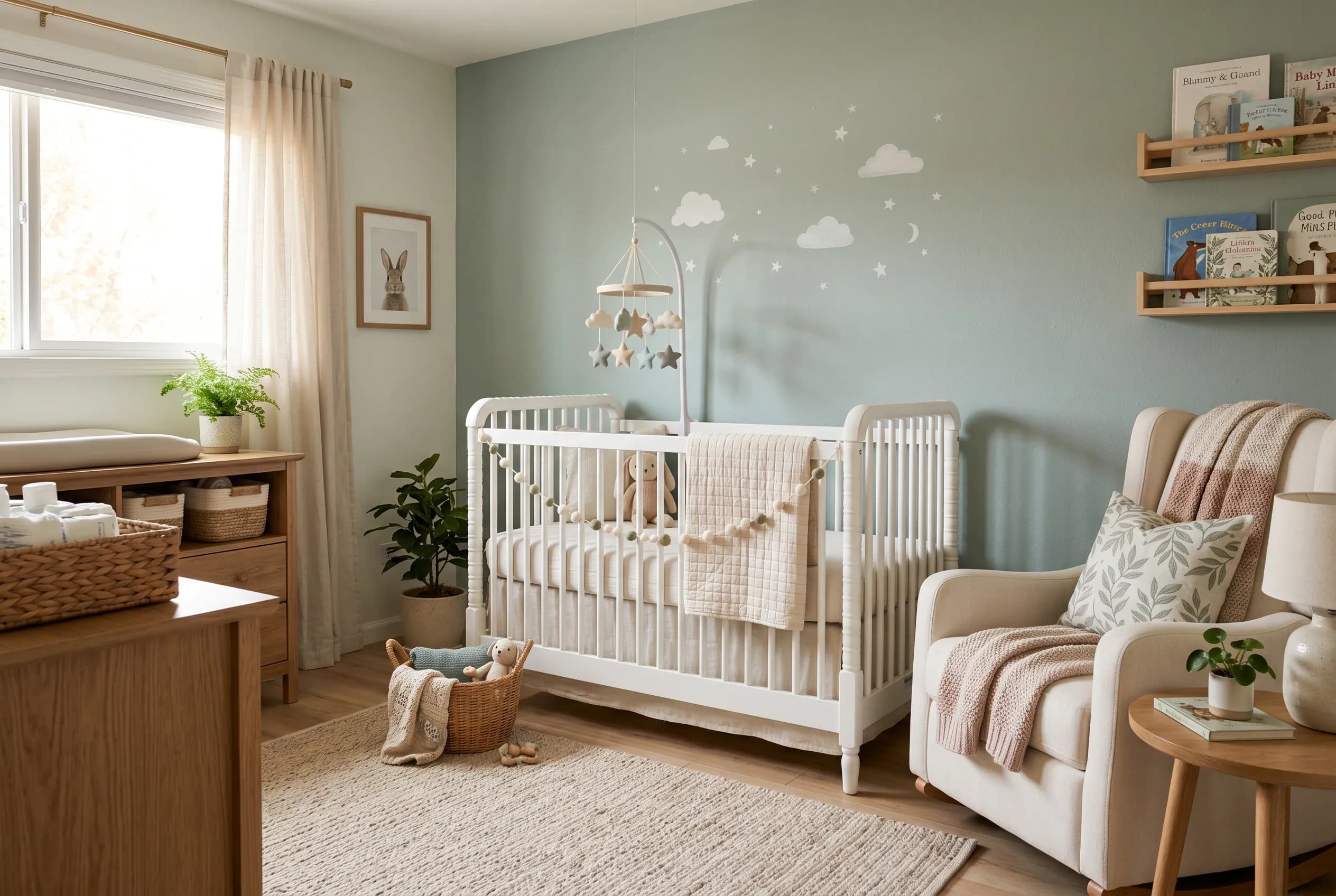
A nursery is a small room asked to do a lot. It is a place for feeding at 3 a.m., for naps that hinge on blackout darkness, and for a baby whose eyes are still learning to track contrast and color. Good nursery design leans into that: soft, muted palettes that calm rather than excite, gentle contrast for visual development, and surfaces that wipe clean. The room should feel restful for the parent sitting in it for hours and unstimulating enough for the child to actually sleep in it.
Function drives the whole layout. The three anchors are the crib, the changing station, and a comfortable feeding chair, and the smartest plans put them within a few steps of each other so a half-asleep parent is not crossing the room mid-task. Keep the crib away from windows, cords, and radiators, and reserve low, reachable storage for the supplies you grab one-handed. Because a nursery turns into a toddler room fast, the layout works best when it can flex: a changing topper that lifts off a dresser, open floor for play, and shelving that swaps diapers for books without a rebuild.
Common Nursery Design Challenges
It outgrows itself fast
The crib-and-changer setup a newborn needs is obsolete within two or three years. Plan for furniture that converts or repurposes so the room grows with the child instead of getting gutted.
Sleep depends on the details
Blackout coverage, a crib placed away from drafts and direct light, and a low-stimulation palette all feed directly into whether a baby actually sleeps. Decor and function are the same decision here.
Safety constrains the plan
Anchored dressers, no cords near the crib, soft corners, and nothing climbable beside the rails. These rules quietly rule out a lot of furniture arrangements before aesthetics enter the picture.
Small footprint, long supply list
Diapers, wipes, clothes, blankets, and bottles add up fast in a room that is usually one of the smallest in the house. Storage has to be generous without crowding the floor a child will soon play on.
Redesign Your Nursery With AI
Start with one photo of the room, or a LiDAR scan if your device supports it, and InteriorLab restyles the whole nursery in seconds while keeping its real dimensions and window placement. Pick from 19 styles to see the space as a soft Scandinavian retreat or a warm boho corner, then refine the pieces that matter: highlight the crib to recolor it, swap a dark dresser for a light convertible one, or Magic Erase clutter to judge the bare layout. Rearrange existing furniture into a safer, more reachable configuration without buying anything, and when something clicks, use Furniture Fit to preview a real glider or bookshelf in AR before you commit. Shop the Room links many pieces to products you can actually buy, and the Budget Planner finds combinations that fit what you have set aside for the room.
Nursery Design Tips
Build the feeding triangle
Place the crib, changing surface, and feeding chair within a few steps of each other so you are not crossing the room half-asleep at night. Keep a small table or shelf beside the chair for water, a phone, and a burp cloth within arm's reach.
Layer the lighting low and warm
Skip a single bright overhead. A warm, dimmable lamp and a low night light let you feed and change without fully waking the baby, while blackout curtains protect daytime naps. Soft, indirect light keeps the room calm at every hour.
Choose furniture that converts
A crib that becomes a toddler bed and a dresser that doubles as a changing station stretch the room's life by years. Pair them with open, low shelving you can restock from diapers to picture books, so the nursery evolves instead of being replaced.
Best Styles for a Nursery
Nursery Design FAQs
What colors are best for a nursery?
Soft, muted tones generally win because they soothe rather than stimulate, which helps with sleep. Warm whites, dusty sage, pale terracotta, and gentle blues are reliable choices. A little higher-contrast detail, like a black-and-white print or a patterned rug, is useful early on since newborns track contrast more easily than subtle color.
Where should the crib go in a nursery?
Away from windows, blinds, and curtain cords, and clear of radiators or heating vents. An interior wall is usually safest, ideally where you can see the crib from the door. Leave the area around the rails free of anything climbable, including chairs, shelves, and storage bins a toddler could use to get a foothold.
How do I design a nursery that will not look babyish in a few years?
Keep the permanent layer neutral and grown-up. Choose furniture, wall color, and flooring you would happily keep for a five-year-old, then add the baby character through swappable pieces: prints, textiles, a mobile, and removable decals. When tastes change, you update the soft layer and leave the bones in place.
Can InteriorLab redesign a nursery in a room that is still a guest room or office?
Yes. Snap a photo of the current room and the AI restyles it as a nursery while keeping the real walls, windows, and dimensions. You can preview different layouts and styles before moving a single piece of furniture, then use Furniture Fit to check that a crib or glider actually fits the space in AR.
Redesign another room
Redesign your nursery today
Download InteriorLab free and see your new space in seconds with AI.