Boho Interior Design
Boho is the art of the gathered room: warm earth tones, layered textiles, and plants spilling over rattan. It feels personal, lived-in, and a little unhurried.


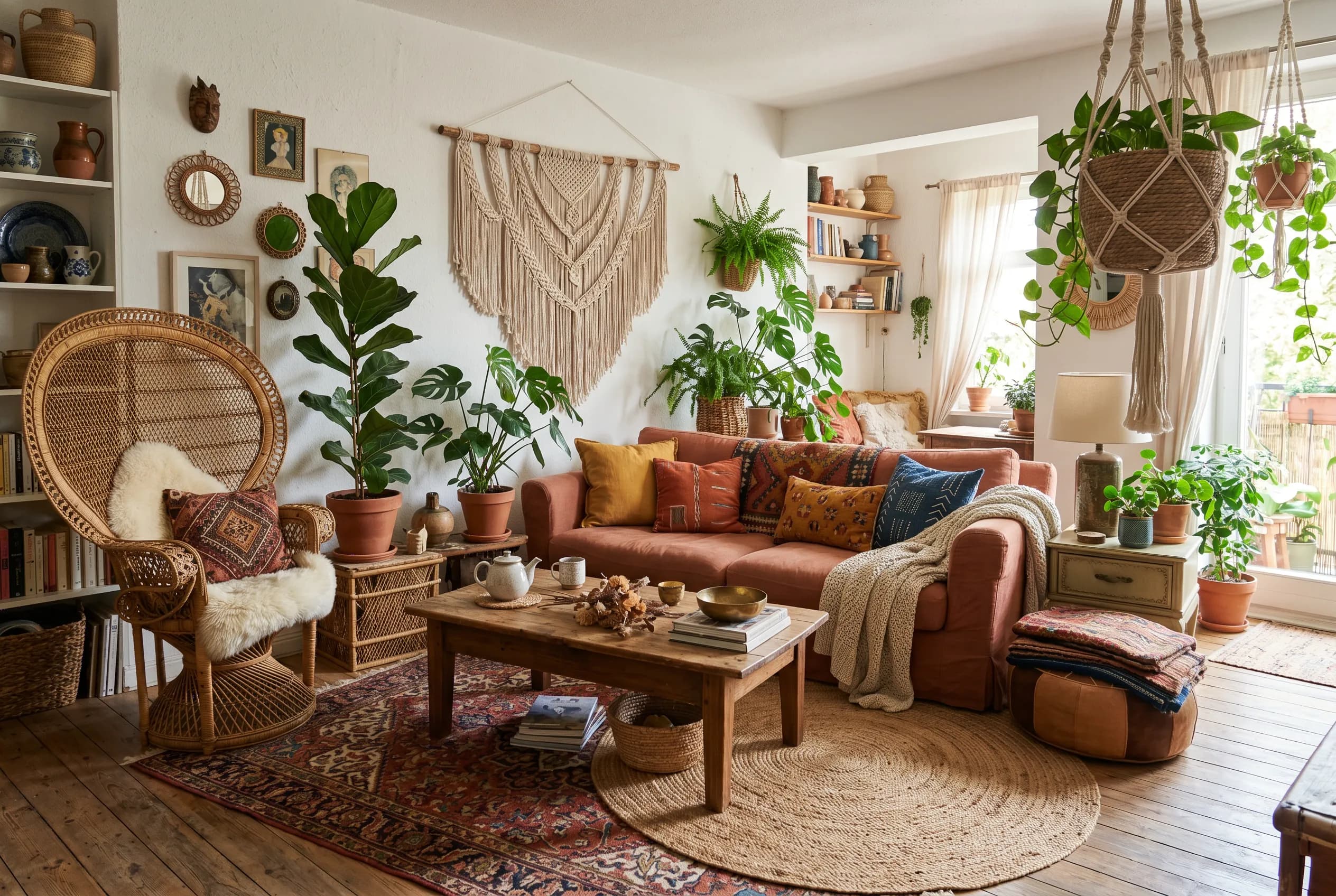
Boho, short for bohemian, is a free-spirited look built on layering rather than matching. It mixes patterns, eras, and origins without apology, leaning on natural materials, plant life, and handmade objects to fill a room with texture. Color stays warm and grounded, while furniture sits low and soft. The guiding idea is that a room should look collected over time, not bought in one trip.
Living in a Boho space feels casual and enveloping, the opposite of a showroom. It rewards people who travel, thrift, and hold onto things with stories attached, because every kilim, basket, and ceramic adds another layer. The style works best in rooms where you actually relax: a sun-filled living room, a soft bedroom, a reading nook. Renters love it too, since most of the character comes from textiles and decor rather than construction.
The bohemian aesthetic traces back to 19th-century Paris, where artists and writers labeled bohemians lived cheaply and dressed in secondhand finery from across the world. The interior version took shape later, absorbing the global, anti-establishment spirit of the 1960s and 70s, when macrame, Moroccan rugs, and houseplants became shorthand for a counterculture home. Much of its visual DNA borrows from Moroccan, Turkish, and Indian craft traditions, which is why hand-knotted textiles and brass keep showing up.
What Defines Boho Design
Layered textiles
Rugs over rugs, throw blankets, floor cushions, and patterned pillows build warmth and softness across the room.
Earthy, warm palette
Terracotta, ochre, rust, and olive ground the space, with creamy neutrals giving the eye somewhere to rest.
Plants everywhere
Trailing pothos, fiddle-leaf figs, and hanging planters bring life and an organic, slightly wild edge.
Mixed patterns and eras
Ikat, suzani, paisley, and tribal motifs sit beside vintage finds, intentionally unmatched and collected-looking.
Natural, handmade materials
Rattan, jute, clay, and raw wood signal craft and keep the look honest rather than polished.
Low, relaxed seating
Floor poufs, daybeds, and low sofas encourage lounging and give the room a casual, grounded posture.
Boho Color Palette
Terracotta
#C46B4A
Warm Ochre
#D99A4E
Olive
#7A7A4E
Rust Red
#9B4722
Sandy Cream
#E8DCC8
Signature Materials
- Rattan and cane
- Jute and sisal
- Macrame and woven cotton
- Hand-knotted wool rugs
- Raw and reclaimed wood
- Terracotta and unglazed clay
- Brass and aged metal
- Leather and suede
Pieces That Define It
- Peacock or hanging rattan chair
- Layered kilim and Moroccan rugs
- Macrame wall hanging
- Low daybed with floor cushions
- Woven baskets and seagrass planters
- Vintage brass and ceramic accents
- Hanging trailing plants
Get a Boho Room in Seconds
Snap a photo of your room, pick Boho, and InteriorLab redesigns the space in seconds with layered rugs, warm earth tones, rattan, and greenery. From there you can refine: highlight a stiff sofa to swap it for a low, soft one, recolor a wall to terracotta, or Magic Erase clutter that breaks the relaxed mood. When a woven chair or kilim catches your eye, Shop the Room links many pieces to real products, and Furniture Fit lets you preview that rattan accent chair in your actual room in AR before you commit.
Tips for Nailing the Boho Look
Layer, then layer again
Boho falls flat when it is too sparse. Stack a smaller patterned rug over a large jute one, pile mismatched pillows, and drape a throw over the back of the sofa. The richness comes from depth, not from a single statement piece.
Anchor the warm chaos with neutrals
All-over pattern reads as noise. Give the room breathing space with creamy walls, a plain linen sofa, or a stretch of bare floor. The calm backdrop is what lets the terracotta and kilims sing.
Let plants do real work
Greenery is structural in Boho, not an afterthought. Vary the heights, use a tall floor plant in a corner, trail a pothos off a shelf, and cluster smaller pots. Real or convincing faux, they soften hard edges and add the organic life the look depends on.
Best Rooms for Boho Style
Boho Design FAQs
What is the difference between Boho and Scandinavian style?
Both love natural materials, but they pull in opposite directions. Scandinavian is pared back, light, and disciplined, with cool neutrals and minimal pattern. Boho is maximal and warm, layering many patterns, deep earth tones, and global decor. A Scandi room looks edited; a Boho room looks gathered.
Does Boho design have to look cluttered?
No. Good Boho is layered, not messy. The trick is repetition and restraint within the abundance: stick to a warm palette, group objects intentionally, and keep some negative space. Modern boho in particular leans cleaner, pairing the textiles and plants with simpler lines.
What plants work best for a Boho room?
Choose plants that trail, sprawl, or grow tall to fill vertical space. Pothos and string of pearls cascade beautifully from shelves, while a fiddle-leaf fig, monstera, or rubber plant gives you a sculptural floor anchor. Macrame hangers and woven seagrass pots reinforce the look.
Can Boho work in a small apartment?
Yes, and it often shines there. Floor cushions, a low daybed, and wall textiles add character without crowding the floor, and vertical plants and hanging decor use space a small room usually wastes. Keep the palette tight and lean on one or two larger rugs rather than many small ones to avoid a busy feeling.
Explore related styles
Design your space in Boho style
Download InteriorLab free and redesign any room with AI in seconds.