Eclectic Interior Design
Eclectic style is the art of the confident mix: a flea-market chair beside a modern sofa, an heirloom rug under a bold contemporary print. Done well, it reads as a life, not a catalog.


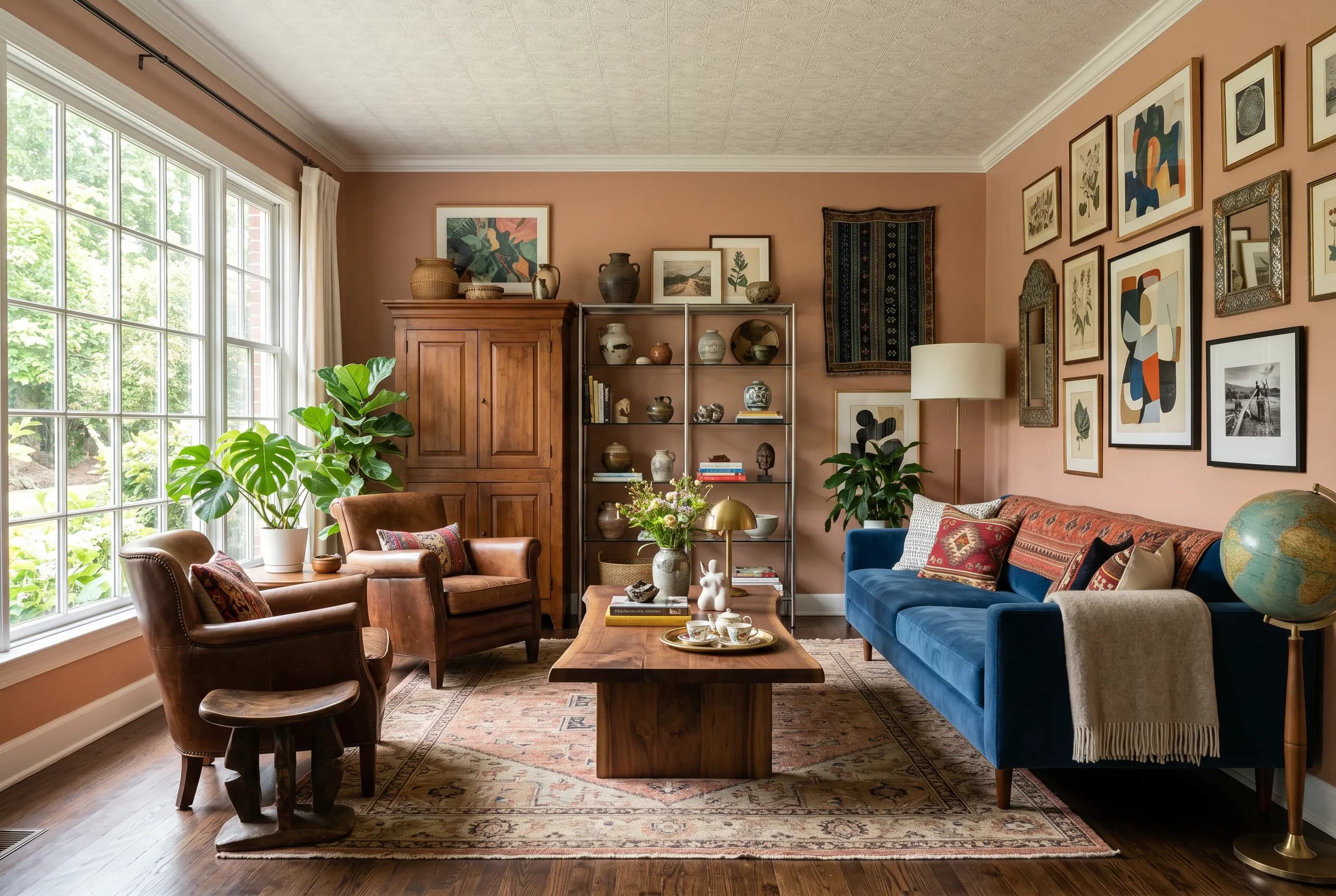
Eclectic design pulls from many periods, styles, and origins and holds them together through deliberate choices about color, scale, and rhythm. It is not the same as random. A successful eclectic room might pair a Victorian wingback with a 1960s pendant and a Moroccan rug, but those pieces share a temperature, a repeated hue, or a sense of weight that keeps the room from reading as a yard sale. The defining quality is intent: every contrast is a decision.
Living with eclectic style means your home can absorb new things over time, the chair you inherited, the lamp you found traveling, the art a friend made, without needing to match anything. That flexibility is the appeal. It rewards collectors and people who change their minds, and it forgives a room that grows in layers rather than arriving all at once. The risk is incoherence, which is why the best eclectic rooms lean on one or two unifying threads to carry the variety.
Eclecticism as a design idea goes back to 19th-century architecture, where the term described buildings that borrowed freely from Greek, Gothic, and Renaissance vocabularies rather than committing to one. The interior version matured in the 20th century through tastemakers who refused a single label, perhaps most famously decorator Dorothy Draper and, later, designers like Madeleine Castaing and Mario Buatta, who layered antiques, color, and pattern with a magpie's confidence. The look gained fresh momentum in the 1970s with global travel and the idea that a home should reflect its owner's biography rather than a showroom's lineup.
What Defines Eclectic Design
Mixed eras and origins
A single room might hold an antique, a mid-century piece, and something brand new. The pleasure is in the conversation between periods rather than fidelity to one.
A unifying thread
Even the most varied eclectic room leans on one anchor, a repeated color, a consistent metal finish, or a shared mood, to hold the mix together.
Personal, collected objects
Travel finds, inherited pieces, and original art carry as much weight as furniture. The room is a record of where you have been and what you love.
Bold contrast in scale and texture
A delicate antique chair sits next to a chunky modern sofa; smooth lacquer meets rough rattan. Contrast is the point, not a problem to smooth over.
Color used with confidence
Eclectic rooms rarely stay neutral. Color pulls disparate pieces into a family, often through a few hues repeated deliberately across the space.
Layered, lived-in feel
Rugs over rugs, art hung in clusters, books and ceramics on every surface. The look accrues over time and never feels finished in a sterile way.
Eclectic Color Palette
Warm Terracotta
#C26B4A
Deep Teal
#1F5F63
Mustard Ochre
#C7972E
Soft Plaster
#E7DDCE
Inky Navy
#23314E
Signature Materials
- Worn leather and patinated wood
- Rattan, cane, and woven fiber
- Kilim, Persian, and vintage rugs
- Brass and mixed metal finishes
- Velvet and patterned upholstery
- Ceramic, terracotta, and handmade pottery
- Lacquer and painted accents
- Hand-thrown and flea-market glass
Pieces That Define It
- Vintage or antique chair paired with a modern sofa
- Gallery wall mixing art, photography, and objects
- Layered area rugs of different patterns
- Statement pendant or found-object floor lamp
- Open shelving crowded with books and ceramics
- A single bold piece of original or oversized art
- Mismatched dining chairs around one table
Get a Eclectic Room in Seconds
With InteriorLab, building an eclectic room starts with one photo of your space, or a LiDAR scan if your device supports it. Choose Eclectic from the 19 styles and the AI restyles the whole room in seconds, mixing eras, finishes, and patterns while keeping your real layout intact. Because eclectic depends on the right combinations rather than a single template, the editing tools matter most: highlight a flat-pack chair to swap it for a vintage shape, recolor a rug to tie the palette together, or Magic Erase one piece when a corner gets too crowded. When the mix lands, use Furniture Fit to preview a statement piece in AR before buying, Shop the Room to find the real lamps and rugs behind the look, and the Budget Planner to assemble a combination that fits what you want to spend.
Tips for Nailing the Eclectic Look
Choose one thread to unify everything
Before mixing, pick a single anchor, a repeated color, a consistent metal, or a shared mood, and make sure it shows up across the room. That quiet through-line is what separates eclectic from chaotic, and it lets every other piece be as different as you like.
Balance old and new on purpose
Pair each antique or vintage piece with something clearly modern nearby so neither era takes over. The contrast keeps the room from reading as a period set on one side and a catalog on the other, and it makes both the old and the new look intentional.
Repeat objects in odd numbers
Group collected items, ceramics, frames, books, in threes and fives rather than pairs, and let a couple of surfaces breathe. Clustering gives the eye a deliberate composition instead of scattered clutter, while the empty pauses keep the layered look from feeling overstuffed.
Best Rooms for Eclectic Style
Eclectic Design FAQs
What is the difference between eclectic and just mismatched?
The difference is intent. A mismatched room collides by accident; an eclectic room mixes on purpose, held together by a repeated color, a shared scale, or a consistent mood. If you can name the thread that ties the pieces together, it is eclectic. If you cannot, it usually just looks unplanned.
How is eclectic different from maximalism or boho?
They overlap but differ in emphasis. Maximalism is about abundance, layering color and pattern until a room is full. Boho leans relaxed, plant-filled, and globally textured. Eclectic is defined by the deliberate mix of distinct eras and styles, and it can be restrained or busy. An eclectic room might even be fairly minimal as long as it crosses periods with intent.
How do I keep an eclectic room from looking cluttered?
Lean on a unifying element and edit hard. Repeat one or two colors throughout, keep a consistent finish on your metals or wood, and leave a few surfaces deliberately empty. The variety should feel composed, so for every piece you add, ask whether it earns its place or just fills space.
Where do I start if I am mixing pieces I already own?
Start by sorting what you have by color and mood rather than by style, and look for the through-line that already exists. Build the room around your two or three favorite pieces, then add contrast slowly. It is easier to introduce one bold new element to a settled base than to assemble everything at once.
Explore related styles
Design your space in Eclectic style
Download InteriorLab free and redesign any room with AI in seconds.