Traditional Interior Design
Traditional design draws on centuries of European craftsmanship: deep wood tones, balanced symmetry, and rooms that feel settled and considered. It is the look of a home that has been loved for generations.


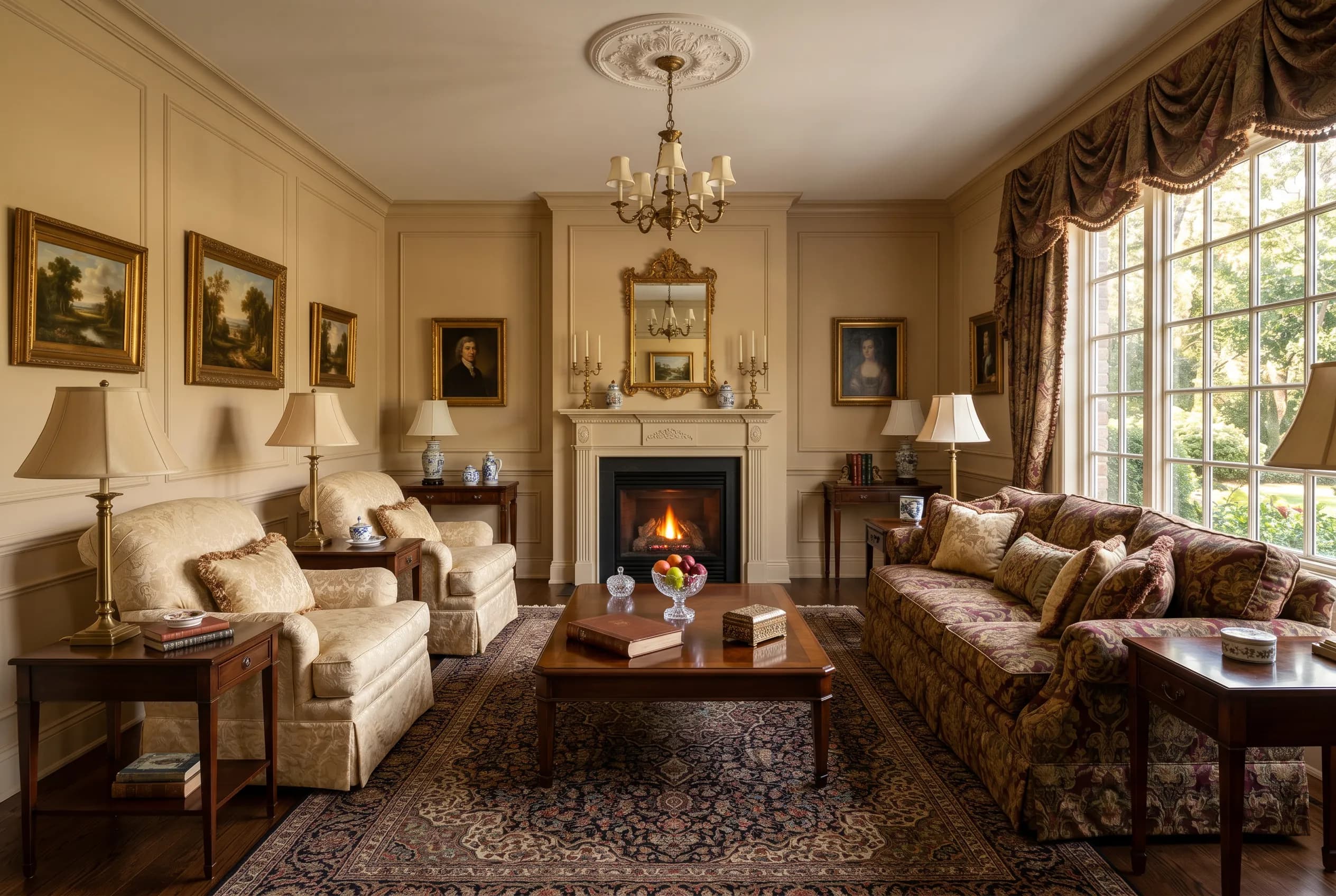
Traditional interior design is rooted in 18th- and 19th-century European decor, particularly English and French styles. It favors order over surprise: matched pairs of lamps, a sofa centered on the fireplace, art hung at eye level in careful arrangements. Furniture has weight and history, with turned legs, carved details, and rich finishes that reward a second look.
Living in a Traditional room feels grounded rather than trendy. Nothing shouts for attention, so the eye relaxes. The style works best when you want a home that reads as warm and established, the kind of space that flatters a dinner party as easily as a quiet Sunday with the newspaper.
Traditional style descends from the formal interiors of Georgian England and the courts of 18th-century France. Cabinetmakers like Thomas Chippendale and Thomas Sheraton set the template with mahogany furniture, claw-and-ball feet, and restrained classical proportion. American colonial and Federal homes adapted these ideas, and the look has been refined ever since without ever fully going out of fashion.
What Defines Traditional Design
Symmetry and balance
Pieces are arranged in matched pairs and centered on a focal point such as a fireplace or large window. The result feels calm and deliberate.
Rich wood tones
Mahogany, cherry, and walnut dominate, often with a hand-rubbed or antiqued finish. Wood is meant to look aged, not raw.
Layered textiles
Drapery, upholstery, and rugs work together in coordinated patterns, adding softness and a sense of comfort to formal rooms.
Classical detailing
Crown molding, wainscoting, and carved furniture legs nod to Greek and Roman architecture, the source of so much traditional ornament.
Muted, warm palette
Colors lean toward warm neutrals, deep reds, and forest greens rather than bright or cool tones, keeping the mood understated.
Considered accessories
Antiques, framed oil paintings, porcelain, and table lamps fill the room, each piece chosen to feel collected rather than bought all at once.
Traditional Color Palette
Antique Cream
#EFE7D6
Mahogany
#6E3B2C
Forest Green
#2F4734
Burgundy
#722F37
Brass
#B08D57
Signature Materials
- Polished mahogany and cherry wood
- Damask and brocade upholstery
- Wool Persian and Oriental rugs
- Aged brass and antique bronze
- Marble fireplace surrounds
- Leather, often tufted and worn
- Heavy lined drapery
- Cut crystal and fine porcelain
Pieces That Define It
- Camelback or rolled-arm sofa
- Wingback armchair
- Chesterfield in tufted leather
- Mahogany sideboard or buffet
- Four-poster or canopy bed
- Oil paintings in gilded frames
- Pairs of porcelain table lamps
Get a Traditional Room in Seconds
Snap a photo of your room or scan it with LiDAR, then choose Traditional and InteriorLab reworks the space in seconds, swapping in rich wood furniture, symmetrical layouts, and warm layered textiles. If a piece feels too heavy, highlight it and ask the app to recolor, replace, or remove it, so you can dial the formality up or down. Preview a wingback chair or sideboard in your actual room with AR Furniture Fit before you commit, and use Shop the Room to find the real pieces behind the look.
Tips for Nailing the Traditional Look
Anchor the room with symmetry
Start by centering a major piece on a focal point, then mirror it with matched pairs. Two identical lamps flanking a sofa or twin chairs facing each other instantly read as Traditional.
Choose wood with depth
Reach for mahogany, cherry, or walnut in a warm, aged finish rather than pale or raw timber. A hand-rubbed sheen is what separates traditional furniture from generic brown wood.
Layer pattern carefully
Mix a floral, a stripe, and a small geometric in a shared color family so they coordinate without competing. Keep one large-scale pattern as the lead and let the rest support it.
Best Rooms for Traditional Style
Traditional Design FAQs
What is the difference between Traditional and Transitional style?
Traditional leans fully into classic detail: carved wood, formal symmetry, and ornate textiles. Transitional keeps that warmth but pares back the ornament, mixing traditional shapes with cleaner contemporary lines for a lighter, less formal result.
Does Traditional design always feel dark and heavy?
Not necessarily. While deep woods and rich colors are signatures, you can lighten a Traditional room with cream walls, generous natural light, and a few painted or upholstered pieces. The style is about craftsmanship and balance, not gloom.
What kind of patterns work in a Traditional room?
Florals, damask, toile, plaids, and stripes are all at home here. The trick is keeping them in one color story and varying the scale so they layer rather than clash.
How do I keep a Traditional room from feeling dated?
Edit ruthlessly and leave breathing room. Pair antiques with a few simpler modern pieces, swap fussy valances for clean drapery panels, and let some surfaces stay empty so the genuine craftsmanship stands out.
Explore related styles
Design your space in Traditional style
Download InteriorLab free and redesign any room with AI in seconds.