Transitional Interior Design
Transitional design splits the difference between traditional comfort and modern restraint, pairing classic silhouettes with clean lines and a quiet, neutral palette. The result is a room that feels collected and calm rather than trendy.


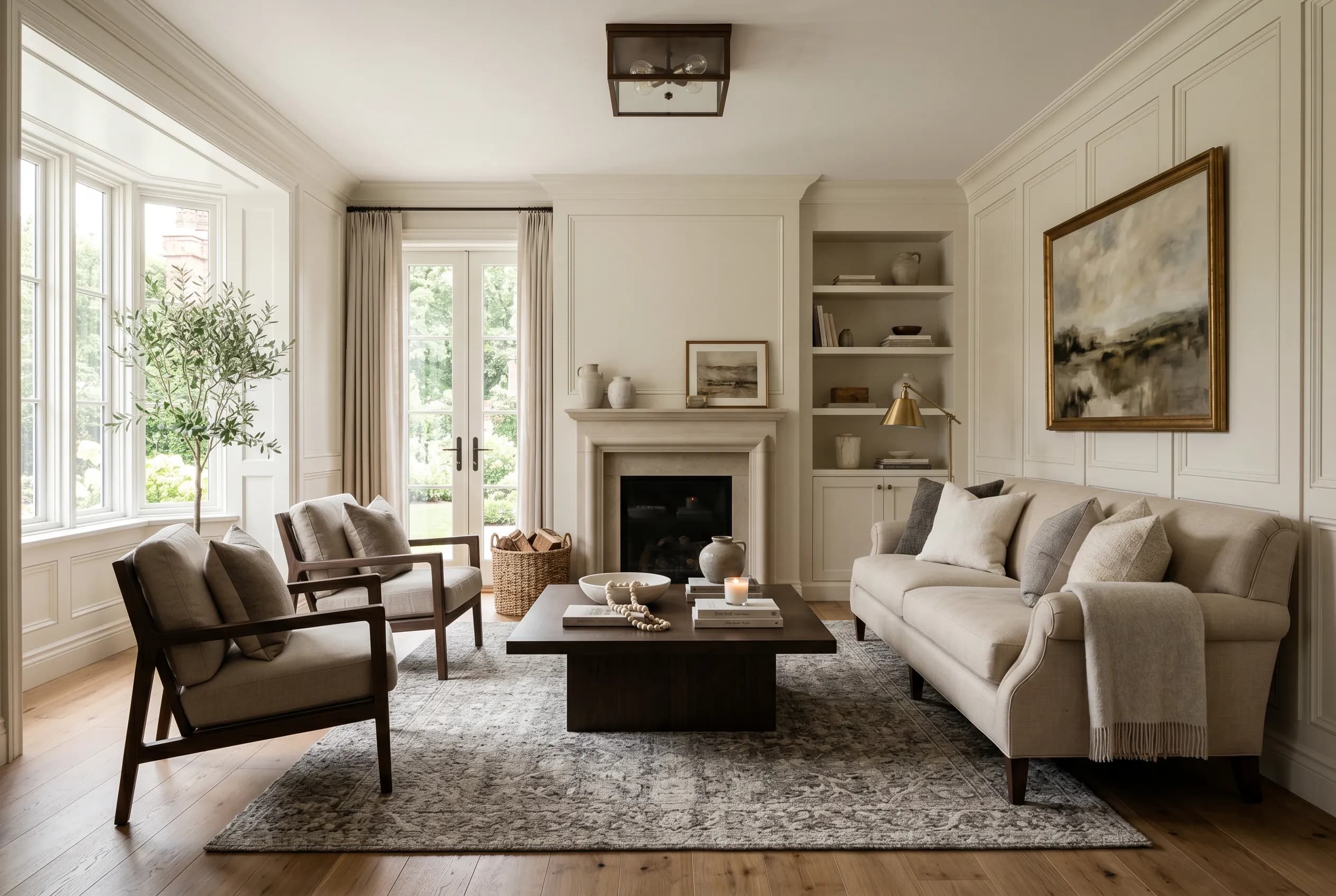
Transitional design is the middle ground between traditional and contemporary. It keeps the comfortable proportions and graceful shapes of classic interiors but strips away the ornament, the fussy trims, and the busy patterns. Furniture tends toward simple, rounded forms upholstered in solid neutrals, while a tight palette and uncluttered surfaces keep everything feeling composed. Texture does the heavy lifting where color and pattern would in other styles.
Living in a transitional room feels easy and unforced. Because it leans on neutrals and timeless shapes rather than of-the-moment statements, it ages well and absorbs new pieces without looking dated. It works especially well for people who love a traditional sofa but cannot stand visual clutter, or who want a modern feel that still reads as warm. It is forgiving, family-friendly, and resale-friendly.
Transitional style took shape in American interiors through the late 1980s and 1990s, as homeowners raised on heavy traditional decor began absorbing the pared-back influence of modernism without fully committing to it. Designers like Barbara Barry and later Thomas O'Brien helped define the look, blending the comfort of classic upholstery with the discipline of clean lines and a hushed palette. It has since become one of the most requested styles in the United States precisely because it refuses to pick a single decade to belong to.
What Defines Transitional Design
Balanced, not matched
The hallmark is the marriage of opposites: a curvy rolled-arm sofa beside a sleek glass-and-metal coffee table. Nothing is fully traditional and nothing is fully modern.
Neutral, layered palette
Color stays quiet, built from cream, greige, taupe, soft gray, and warm brown. With pattern dialed down, depth comes from layering tones rather than mixing hues.
Clean lines, soft edges
Profiles are simplified and ornament is minimal, but corners are often gently rounded or chamfered rather than razor-sharp, keeping the room from feeling cold.
Texture over pattern
Linen, boucle, nubby wool, and grained wood supply interest where florals and damasks would in a traditional space. Tone-on-tone is the move.
Restrained, intentional accessories
Surfaces stay clear. A few well-chosen objects, a stack of books, a single sculptural lamp do more than a crowded mantel ever could.
Transitional Color Palette
Warm Cream
#F2ECE1
Greige
#C7BCA9
Soft Taupe
#A1907B
Slate Gray
#6E6F71
Espresso Brown
#3E342B
Signature Materials
- Linen and cotton upholstery
- Boucle and nubby wool
- Stained or grained hardwood
- Brushed nickel and matte brass
- Honed marble and limestone
- Clear and smoked glass
- Natural fiber rugs like wool and jute
- Lacquered or painted casework
Pieces That Define It
- Rolled-arm or track-arm sofa in a solid neutral
- Glass-and-metal or stone-topped coffee table
- Wingback or barrel accent chair, simplified
- Tone-on-tone area rug with subtle texture
- Tailored Roman shades or linen drapery
- Sculptural ceramic or metal table lamp
- Mix of open and closed wood storage
Get a Transitional Room in Seconds
Snap a photo of your room or run a LiDAR scan, pick Transitional, and InteriorLab redesigns the space in seconds, settling your existing layout into a balanced mix of classic shapes and clean lines. From there you can refine specific pieces: highlight a dated patterned sofa to swap it for a solid neutral one, recolor walls to a warm greige, or use Magic Erase to clear a cluttered surface. When a piece clicks, Shop the Room links many items to real products, Furniture Fit lets you preview a chair in AR before buying, and the Budget Planner finds combinations that hold the look without blowing your number.
Tips for Nailing the Transitional Look
Anchor with one classic, one modern
Start each room by pairing a traditional element with a contemporary one. A carved wood console under a frameless mirror, or a curvy sofa facing a low geometric table. That single tension is what makes a room read as transitional rather than just beige.
Let texture replace pattern
Keep most surfaces solid, then build interest with material contrast. Combine smooth linen, nubby boucle, grained oak, and honed stone in the same neutral family. The eye stays busy without a single print in the room.
Edit your accessories hard
Transitional spaces fall apart when shelves and tables get crowded. Choose a few larger objects over many small ones, leave breathing room around them, and resist filling every surface. Negative space is part of the style.
Best Rooms for Transitional Style
Transitional Design FAQs
What is the difference between transitional and contemporary design?
Contemporary chases whatever is current and leans cooler, more architectural, and more minimal. Transitional deliberately keeps one foot in tradition, so it includes classic furniture shapes, warmer neutrals, and a softer, more comfortable feel. Transitional ages more gracefully because it is not tied to a single moment.
Is transitional design going out of style?
Unlikely, because its whole premise is to avoid trend-chasing. By blending timeless silhouettes with clean lines and neutral color, transitional rooms sidestep the dated look that hits more fashion-driven styles. It is one of the safest long-term choices for resale and for living.
What colors work best for a transitional room?
Stay in a warm neutral band: cream, greige, taupe, soft gray, and brown, layered tone-on-tone. You can introduce a muted accent like deep navy, sage, or charcoal in small doses, but the base should remain calm and uncomplicated so the furniture shapes do the talking.
Can I mix traditional and modern furniture I already own?
Yes, that mix is the heart of the style. Pair an inherited classic piece with something simpler and more streamlined, and tie them together with a consistent neutral palette and shared finishes. The trick is intentional contrast, not random combination, so aim for one clear traditional and one clear modern note per grouping.
Explore related styles
Design your space in Transitional style
Download InteriorLab free and redesign any room with AI in seconds.