Contemporary Interior Design
Contemporary design follows the present moment: clean lines, an open feel, and a calm neutral base warmed by a few confident materials. The result is a room that looks current without trying too hard.


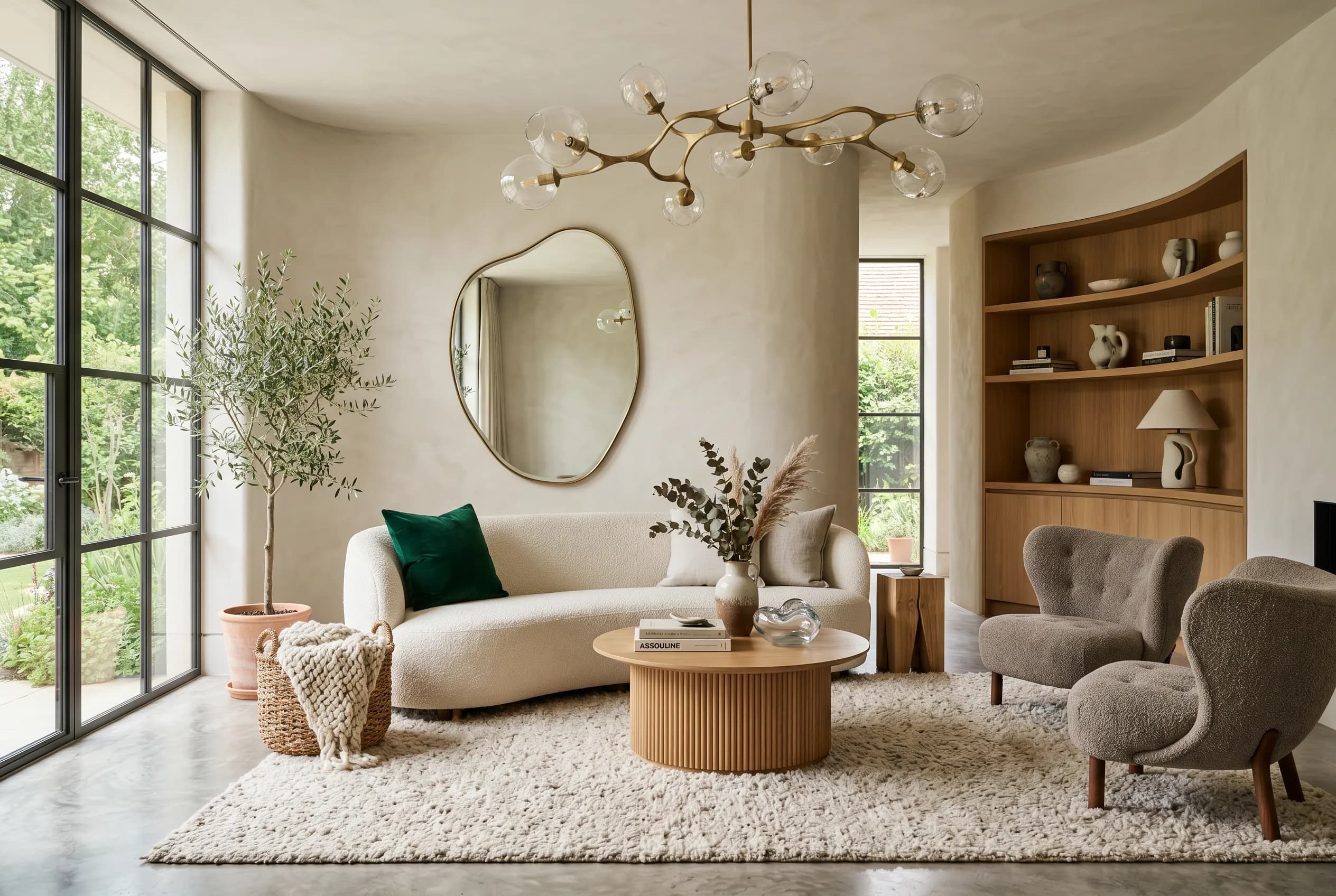
Contemporary is the style of right now, which means it keeps shifting as tastes do. At its core sit uncluttered lines, generous negative space, and a restrained palette built around grays, whites, taupes, and black. Rooms read as fluid and open rather than themed, with each piece earning its place.
Living in a Contemporary space feels light and unforced. Because the backdrop stays neutral, you can swap in a bolder rug or a sculptural lamp and the whole room resets. It suits people who want a polished, gallery-calm home that is easy to refresh and never feels frozen in one era.
Contemporary design grew out of the late-twentieth-century reaction to rigid period styles, borrowing the structural honesty of modernism while staying deliberately undefined. Unlike Mid-Century Modern, which is anchored to the 1950s and 60s, Contemporary has no fixed decade; it absorbs whatever the current design conversation values, from the soft minimalism of the 1990s to today's rounded forms and warm neutrals. That moving-target quality is the point.
What Defines Contemporary Design
Clean, deliberate lines
Furniture and architecture favor crisp horizontals and smooth curves over ornament. Silhouettes stay simple so the room feels composed rather than busy.
Neutral base, sharp accents
Walls and large pieces lean gray, white, or greige, then a single saturated color or a black detail provides contrast. The eye lands exactly where you want it.
Open, breathing space
Negative space is treated as a design element. Rooms are edited down so each object reads clearly and the floor plan feels airy.
Mixed but limited materials
A Contemporary room pairs a few honest materials, such as steel, glass, stone, and wood, rather than layering many at once.
Statement lighting
Lighting often doubles as sculpture, with a linear pendant or an oversized arc lamp anchoring the room as an intentional focal point.
Smooth, low-contrast textures
Surfaces trend toward matte and polished finishes, like brushed metal, honed stone, and tight-weave upholstery, keeping the look sleek.
Contemporary Color Palette
Soft White
#F4F2EE
Warm Greige
#C9C2B6
Cool Gray
#8A8D8F
Charcoal
#2E2E30
Muted Olive Accent
#6E6B4E
Signature Materials
- Polished and brushed stainless steel
- Tempered glass
- Honed marble and quartz
- Smooth lacquered or matte wood veneer
- Concrete and microcement
- Tight-weave wool and linen upholstery
- Leather in neutral tones
- Powder-coated black metal
Pieces That Define It
- Low-slung neutral sofa with clean arms
- Sculptural arc or linear pendant lamp
- Glass-and-metal coffee table
- Large-scale abstract artwork
- Built-in or floating cabinetry with flat fronts
- Geometric area rug in a muted tone
- Slim-profile track or recessed lighting
Get a Contemporary Room in Seconds
Snap or LiDAR-scan your room in InteriorLab, choose Contemporary from the 19 styles, and the AI restyles it in seconds with clean lines, a neutral base, and current-feeling finishes. From there you can refine specific pieces: highlight a dated sofa to swap it for a low-slung neutral one, recolor a wall to a soft greige, or use Magic Erase to clear clutter that breaks the open look. Preview a replacement piece in your actual space with Furniture Fit in AR, then use Shop the Room to find the real products behind the design before you commit.
Tips for Nailing the Contemporary Look
Edit before you add
Contemporary lives on restraint, so start by removing pieces rather than buying more. Clear surfaces and a little empty floor do more for the look than a new accessory.
Let one material carry contrast
Pick a single bold note, such as black powder-coated metal or a vein-heavy marble, and repeat it sparingly. Too many competing finishes turn sleek into chaotic.
Treat lighting as a focal point
Choose one sculptural fixture, like a linear pendant over the table or an arc lamp by the sofa, and let it anchor the room. Layer in recessed or track lighting around it for an even, modern wash.
Best Rooms for Contemporary Style
Contemporary Design FAQs
What is the difference between Contemporary and Modern design?
Modern refers to a specific historical movement from the early to mid-twentieth century, with fixed hallmarks like Bauhaus geometry and warm woods. Contemporary has no set period; it reflects whatever is current, so today's Contemporary leans on soft neutrals and rounded forms that pure Modern never used. In short, Modern is dated on purpose, Contemporary keeps moving.
Does Contemporary design have to feel cold?
No. The neutral palette can read clinical if you stop at gray and glass, but adding warmth fixes it fast. Bring in wood tones, a chunky wool throw, leather, and soft indirect lighting, and the same clean lines feel calm and inviting instead of sterile.
What colors work best in a Contemporary room?
Build on a neutral foundation of soft white, greige, and gray, with black for definition. Then introduce one accent color, often a muted olive, deep blue, or rust, used in a rug, artwork, or single chair so it reads as intentional rather than busy.
How do I keep a Contemporary space from looking dated?
Anchor the room with timeless neutral large pieces, like the sofa, cabinetry, and rug, and let the trend-driven elements live in cheap-to-swap accents such as cushions, art, and lamps. Because the bones stay neutral, you can refresh the current look every few years without a full renovation.
Explore related styles
Design your space in Contemporary style
Download InteriorLab free and redesign any room with AI in seconds.