Minimalist Interior Design
Minimalism trades clutter for breathing room: clean lines, a tight palette, and only the pieces that earn their place. The result is a space that feels quiet, ordered, and easy to live in.


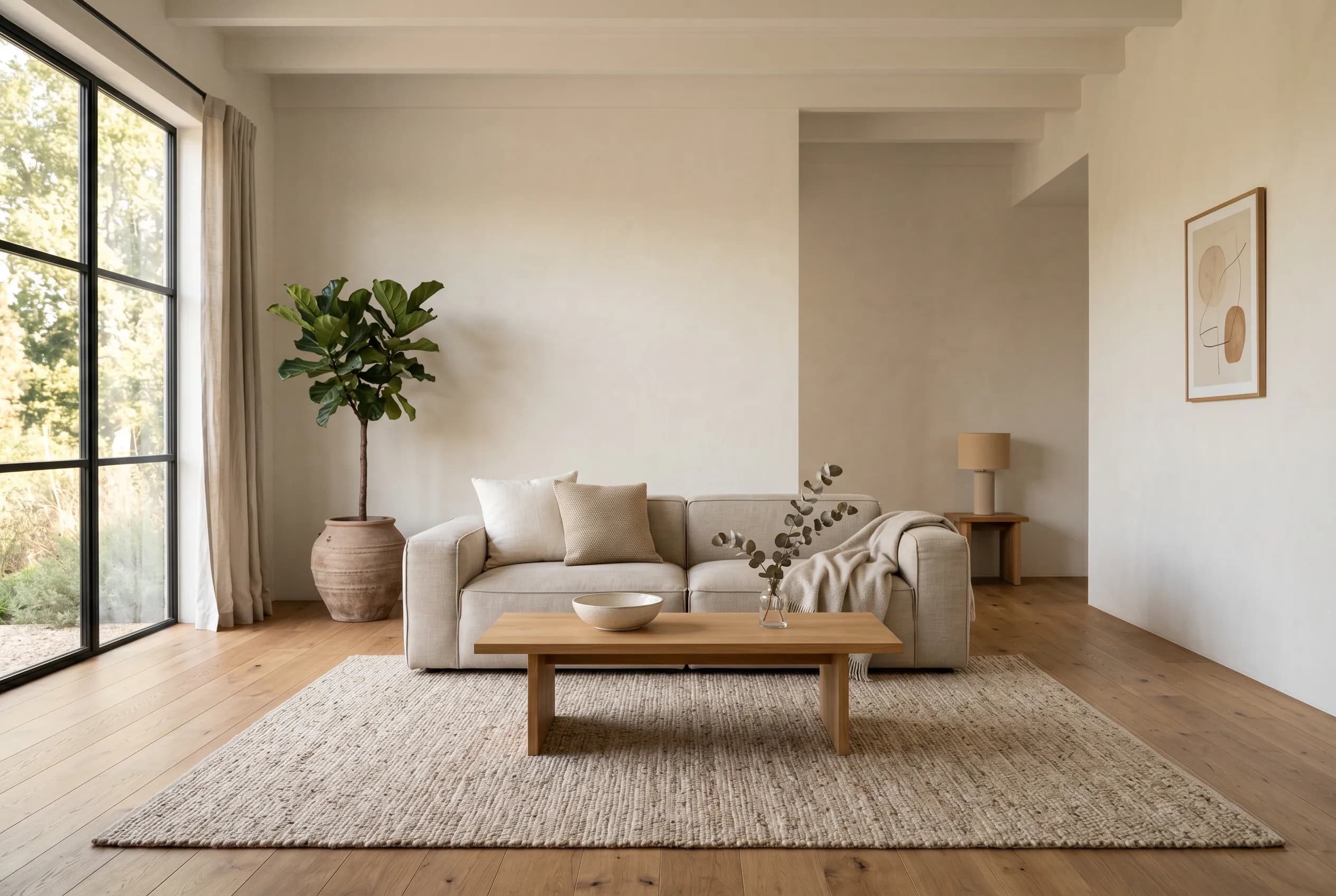
Minimalist interior design is built on subtraction. It keeps the forms simple, the color range narrow, and the surfaces uncluttered, so the few objects in a room carry real weight. The discipline is not about owning less for its own sake; it is about choosing well, then letting each piece breathe.
Living in a minimalist space tends to feel calm rather than cold when it is done right. Natural light, soft texture, and a handful of considered objects do the work that pattern and accessories do elsewhere. It suits people who want their home to feel restful, and it works especially well in small apartments where every extra object reads as clutter.
Minimalism crossed into interiors from 1960s art, where sculptors like Donald Judd and painters like Agnes Martin stripped work down to pure form and repetition. It drew on the Bauhaus credo that form follows function and on Mies van der Rohe's "less is more," then absorbed the restraint of the traditional Japanese house. By the 1980s and 90s, architects such as John Pawson had turned those ideas into a recognizable way of building and furnishing rooms.
What Defines Minimalist Design
Negative space as a feature
Empty floor and wall space is deliberate, not unfinished. The gaps between objects are part of the composition and give the eye somewhere to rest.
Tight, tonal palette
Most minimalist rooms stay within two or three closely related neutrals. Contrast is used sparingly, often a single dark or warm accent against an otherwise quiet field.
Clean, geometric lines
Furniture leans on simple rectilinear or gently curved shapes with little ornament. Profiles stay low and silhouettes stay legible.
Hidden storage
Clutter is designed out. Built-ins, flush cabinetry, and concealed handles keep daily mess off the surfaces and out of view.
Texture over pattern
With color and decoration pared back, interest comes from material: the grain of oak, the weave of linen, the matte of plaster.
Considered lighting
Layered, often warm light replaces busy fixtures. Recessed and indirect sources keep the ceiling plane clean.
Minimalist Color Palette
Soft White
#F5F4F1
Warm Greige
#D8D2C7
Pale Stone
#BFB8AC
Muted Taupe
#8E867A
Charcoal
#2B2A28
Signature Materials
- Pale oak and ash
- Polished or honed concrete
- Lime plaster walls
- Natural linen and cotton
- Matte ceramic
- Brushed stainless steel
- Frosted and clear glass
- Honed stone
Pieces That Define It
- Low-profile platform sofa in neutral upholstery
- Flush, handleless storage and built-in cabinetry
- A single sculptural lounge chair
- Slim-frame floor or arc lamp
- Plain wool or undyed rug
- One large-scale plant in a simple vessel
- Unframed or thin-framed monochrome art
Get a Minimalist Room in Seconds
Snap a photo of your room, or LiDAR-scan it, and choose Minimalist from the style list. InteriorLab redesigns the space in seconds, paring back the palette, simplifying the furniture, and clearing the surfaces while keeping your room's actual proportions and light. From there you can refine: highlight a busy rug or an extra cabinet and use Magic Erase to take it out, recolor a wall to a softer neutral, or swap a fussy lamp for a slim one. When a piece works, Shop the Room links many of them to real products, and Furniture Fit lets you preview a chair or table in AR before you commit. Set a number in the Budget Planner and the AI proposes combinations that hold the minimalist look without going over.
Tips for Nailing the Minimalist Look
Edit before you decorate
Minimalism starts with removal, not buying. Clear a room down to the essentials, then add back only the pieces you genuinely use or love. The empty space you keep is the point.
Stay within one tonal family
Pick a base neutral and build a couple of close shades around it rather than reaching for contrast. If you want an accent, limit it to a single material or color so it actually registers.
Let texture carry the room
Without pattern to lean on, surfaces do the heavy lifting. Mix matte and natural finishes, such as a linen sofa against oak and a wool rug, so the space reads warm rather than clinical.
Best Rooms for Minimalist Style
Minimalist Design FAQs
Does minimalist design have to feel cold or empty?
No, and that is the most common misread. The warmth comes from natural materials, soft layered lighting, and a few tactile pieces rather than from pattern or color. Wood, linen, and plaster keep a pared-back room feeling lived-in instead of sterile.
What is the difference between minimalist and Scandinavian style?
They overlap heavily, but Scandinavian design is warmer and cozier by default, leaning on light wood, soft textiles, and a touch of hygge comfort. Pure minimalism is more austere and architectural, willing to leave a wall completely bare and a palette nearly monochrome.
How do I keep a minimalist room from looking unfinished?
Intent is what separates minimal from bare. Use generous negative space deliberately, give your few objects room to stand alone, and make sure lighting and proportion feel considered. One large, well-placed piece reads as design; a half-furnished room reads as a work in progress.
Is minimalism a good choice for a small apartment?
Yes. In a small footprint, clutter shows immediately, so a restrained palette and hidden storage make the space feel larger and calmer. Fewer, multi-purpose pieces and clear sightlines are exactly what a compact home needs.
Explore related styles
Design your space in Minimalist style
Download InteriorLab free and redesign any room with AI in seconds.