Scandinavian Interior Design
Pale wood, soft daylight, and furniture that earns its place. Scandinavian rooms feel calm and unhurried, with just enough warmth to keep the restraint from turning cold.


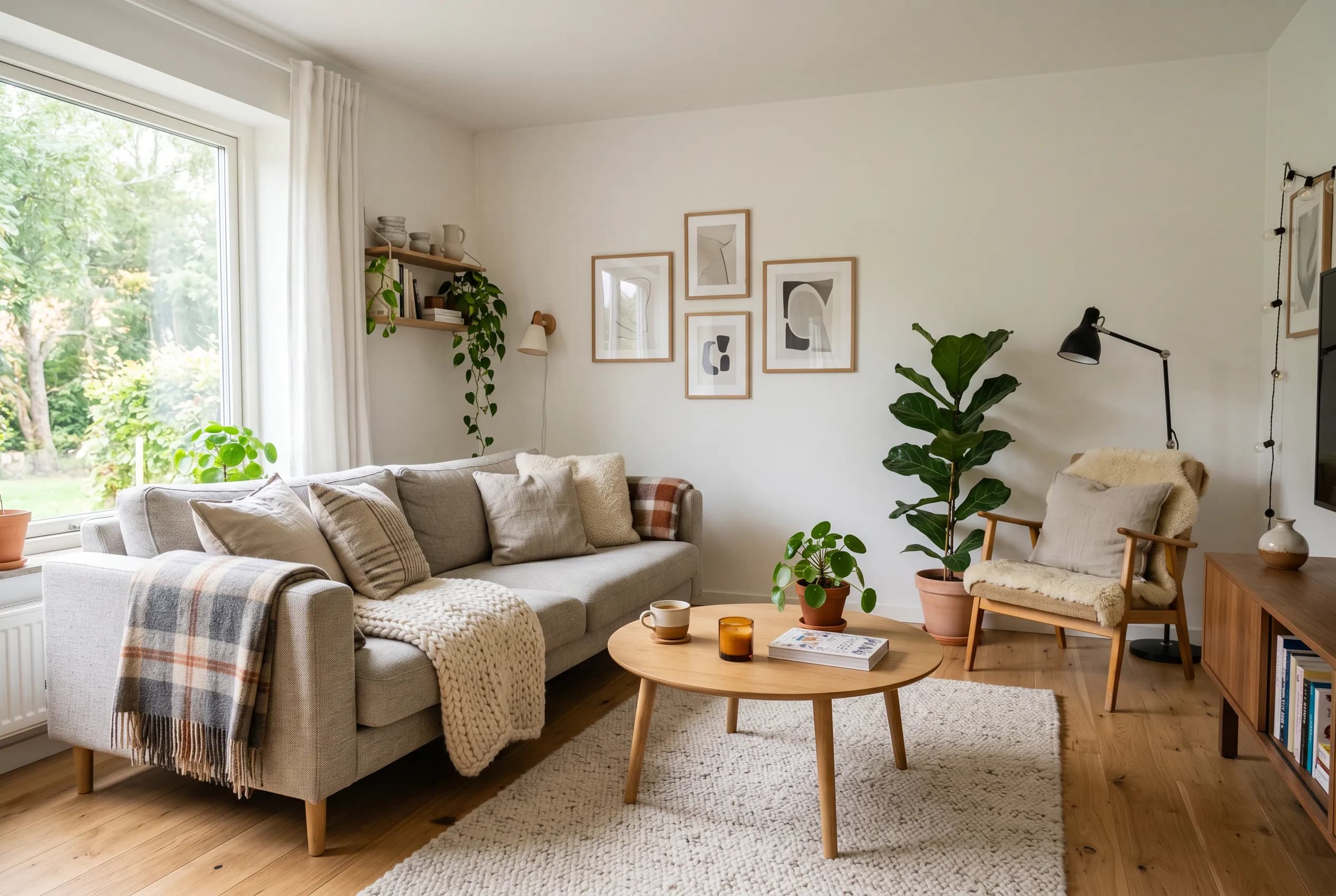
Scandinavian design is a Nordic approach built on light, function, and quiet craftsmanship. It pairs a bright, mostly neutral palette with natural materials like ash, birch, and wool, then keeps decoration minimal so every object reads as deliberate. The look is clean without feeling clinical, and comfortable without clutter. Practicality is the organizing principle here, not an afterthought.
Living in a Scandinavian room feels like exhaling. Because the palette is light and the surfaces stay uncluttered, even a small apartment reads as open and airy. The style works especially well in homes that get limited daylight for part of the year, since the pale tones bounce what little light there is. It also suits anyone who wants a backdrop that stays restful rather than competing for attention.
The style took shape across Denmark, Sweden, Norway, Finland, and Iceland in the early-to-mid 20th century, crystallizing at the 1954 Design in Scandinavia traveling exhibition that introduced it to North America. Long, dark winters pushed designers toward light-reflecting interiors, while a strong democratic-design ethos, embodied by figures like Alvar Aalto, Arne Jacobsen, and Hans Wegner, insisted that good, well-made furniture should be affordable to ordinary households rather than reserved for the wealthy.
What Defines Scandinavian Design
Light-first palette
Walls and large surfaces stay pale to reflect daylight. White, off-white, and soft gray dominate so rooms feel bright even under low winter sun.
Honest natural materials
Light woods, wool, linen, and leather are left close to their raw state. Grain and texture do the decorating instead of heavy ornament.
Functional restraint
Every piece serves a purpose, and clutter is designed out rather than hidden. Storage is built in and surfaces stay clear.
Hygge warmth
Sheepskins, chunky throws, and candlelight add the cozy, lived-in comfort the Danes call hygge, softening the minimalism.
Clean, organic lines
Furniture favors gentle curves and tapered legs over sharp angles, so shapes feel approachable rather than severe.
Considered greenery
A few well-placed plants bring life to the neutral backdrop without crowding it, reinforcing the connection to nature.
Scandinavian Color Palette
Soft White
#F4F1EC
Warm Birch
#D8C3A5
Misty Gray
#B8B5AE
Muted Sage
#9CA98E
Charcoal Accent
#3C3B37
Signature Materials
- Light ash and birch wood
- Natural wool
- Linen
- Sheepskin and shearling
- Untreated leather
- Matte ceramic and stoneware
- Woven jute and rattan
- Brushed pale stone
Pieces That Define It
- Tapered-leg sofa in pale gray or oatmeal
- Wishbone or molded plywood dining chair
- Light wood spindle-leg coffee table
- Sheepskin throw draped over a chair
- Paper pendant lamp or simple globe fixture
- Open low-slung shelving in natural wood
- Stoneware vase with a single dried stem
Get a Scandinavian Room in Seconds
With InteriorLab, getting the Scandinavian look starts with a single photo of your room, or a LiDAR scan if your device supports it. Pick Scandinavian from the 19 styles and the AI restyles the whole space in seconds, swapping in light woods, soft neutrals, and pared-back furniture while keeping your room's real layout. From there you can refine specific pieces: highlight a dark sofa to recolor it oatmeal, Magic Erase a cluttered console, or replace a heavy rug with a flat-woven one. When a layout clicks, use Furniture Fit to preview real pieces in AR before you buy, and Shop the Room to find the actual chairs, lamps, and textiles behind the look.
Tips for Nailing the Scandinavian Look
Keep the base bright, add warmth in layers
Start with pale walls and light wood, then layer in wool throws, a sheepskin, and linen cushions. The contrast between the cool base and warm textiles is what keeps the room from feeling stark.
Edit ruthlessly
Scandinavian style lives in the empty space as much as the objects. Clear surfaces, choose a few quality pieces over many cheap ones, and give built-in storage a job so nothing sits out by default.
Let one natural accent do the talking
A single dried branch in a stoneware vase or one trailing plant adds life without breaking the calm. Resist filling every shelf; restraint is the point.
Best Rooms for Scandinavian Style
Scandinavian Design FAQs
What is the difference between Scandinavian and minimalist design?
Both prize restraint, but Scandinavian design is warmer and more inviting. It leans on natural woods, soft textiles, and hygge comfort, whereas pure minimalism can read cooler and more architectural. Think of Scandinavian as minimalism with a sheepskin thrown over the chair.
Does Scandinavian style only work with white walls?
No. White and off-white are the most common because they maximize daylight, but soft grays, muted sage, and pale blush all fit the palette. The key is keeping large surfaces light and low-contrast so the room stays bright and calm.
What is hygge, and how does it relate to Scandinavian interiors?
Hygge is a Danish concept of cozy, contented well-being. In interiors it shows up as candlelight, soft throws, sheepskins, and warm wood, the comforting layer that keeps Scandinavian restraint from feeling cold or sterile.
Which woods are most authentic for a Scandinavian look?
Light, pale-grained species are the signature: ash, birch, beech, and pine. They reflect light and keep the room feeling airy. Darker woods like walnut can appear as small accents, but the dominant tone should stay light.
Explore related styles
Design your space in Scandinavian style
Download InteriorLab free and redesign any room with AI in seconds.