Coastal Interior Design
Coastal design borrows the calm of a shoreline morning: pale walls, sun-bleached wood, and just enough blue to remember the water. It is a room that exhales.


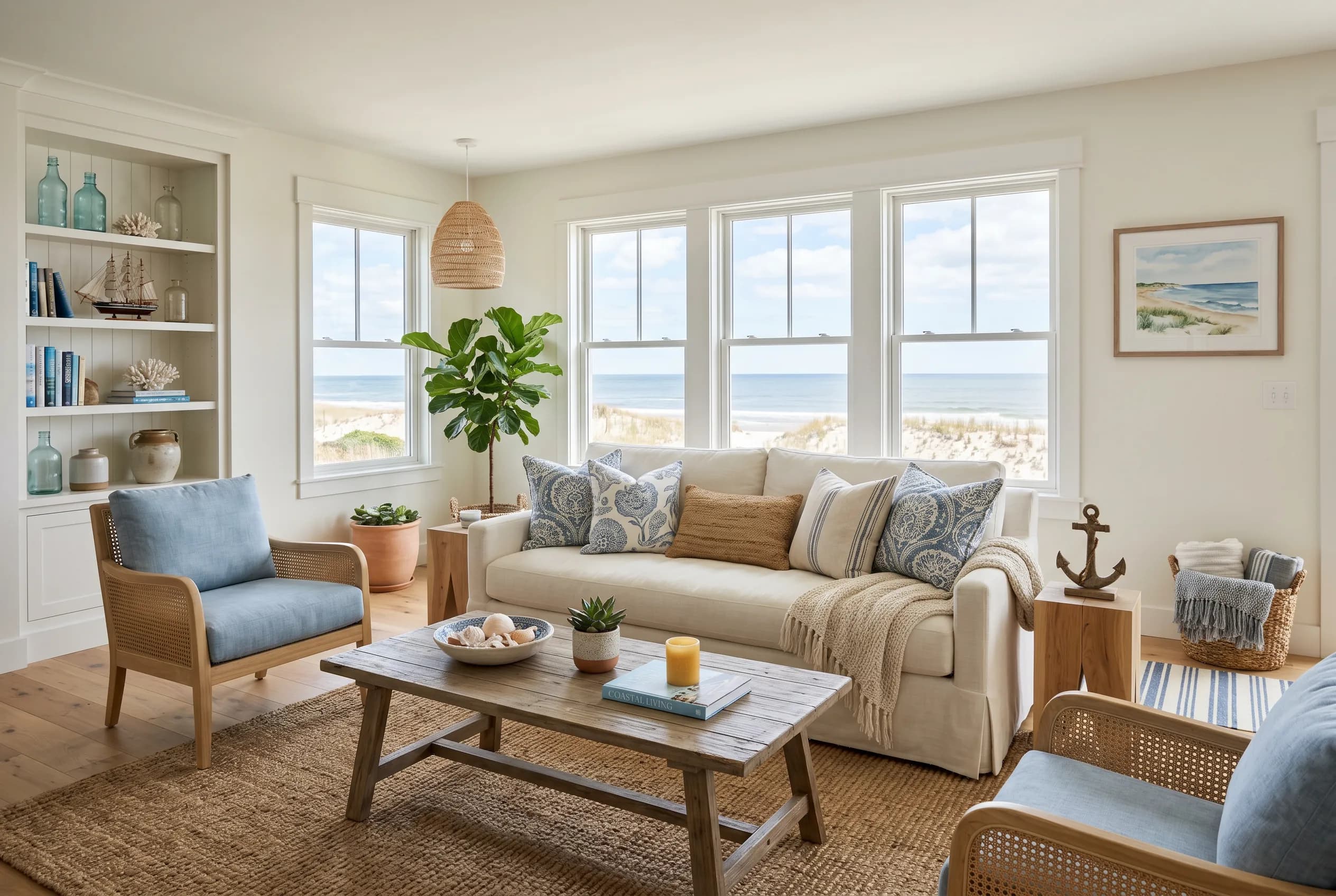
Coastal interiors are built around light and air. The look leans on a soft, sun-washed palette of whites, sandy neutrals, and blues drawn from sea and sky, then keeps surfaces uncluttered so daylight can move freely. Natural materials do most of the talking here: linen, jute, rattan, and weathered wood stand in for anything glossy or heavy. The effect is relaxed rather than themed, more about a feeling of openness than literal anchors and seashells.
Living in a coastal room feels like the moment you open the windows on a warm day. It suits homes that get good natural light and people who want calm over drama, and it is forgiving with kids and sand and wet swimsuits because the materials are meant to be touched. The style works year-round, but it shines in beach houses, lake cabins, and any space where you want summer to linger a little longer than it should.
Modern coastal style traces back to the Hamptons and New England shingle houses of the early twentieth century, where summer homes were built to stay cool and bright through humid months. Designers like Victoria Hagan and Ralph Lauren later refined the look into an American classic, trading nautical kitsch for restraint: pale shiplap, slipcovered furniture you could throw in the wash, and a palette pulled straight from the dunes. It shares DNA with British seaside and Mediterranean coastal traditions, but the American version is defined by its love of crisp white and casual, lived-in ease.
What Defines Coastal Design
Light-soaked and airy
Rooms are kept open and breathable, with sheer curtains or bare windows that let daylight pour in. Negative space is treated as a feature, not a gap to fill.
Sea-and-sand palette
Whites and warm neutrals form the base, accented by blues that range from pale aqua to deep navy. Color is used sparingly, like glimpses of water through a doorway.
Natural, tactile materials
Jute rugs, rattan chairs, linen upholstery, and weathered or whitewashed wood give the room texture and warmth without weight or shine.
Casual, durable furniture
Slipcovered sofas, painted finishes, and pieces that can handle real life signal comfort over formality. Nothing here is too precious to sit on with damp hair.
Subtle coastal cues
References to the sea stay quiet: a piece of coral, a striped pillow, a bowl of weathered glass. The look reads coastal without leaning on anchors, oars, or rope.
Coastal Color Palette
Sail White
#F7F5F0
Driftwood Beige
#D8CBB6
Sea Glass
#A8C5C0
Sky Blue
#7FA8C9
Deep Navy
#2C4A63
Signature Materials
- Whitewashed and weathered wood
- Natural linen
- Jute and sisal
- Rattan and woven cane
- Cotton slipcovers and ticking stripes
- Rope and twine accents
- Sea grass and wicker
- Glazed ceramic and sea glass
Pieces That Define It
- Slipcovered linen sofa in white or oatmeal
- Rattan or wicker accent chair
- Jute area rug over pale floors
- Whitewashed or reclaimed-wood coffee table
- Woven pendant or rope-wrapped lamp
- Glass hurricane lanterns and clear vessels
- Blue-and-white striped throw pillows
Get a Coastal Room in Seconds
Snap a photo of your room, or scan it with LiDAR, and pick Coastal from the 19 styles in InteriorLab. The AI redesigns the space in seconds, washing the walls in a paler tone, swapping heavy furniture for lighter linen and rattan pieces, and laying down a jute rug where the old one sat. If a single item feels off, highlight it and recolor or replace it, or use Magic Erase to clear a piece that crowds the room. When you find a sofa or chair you like, Furniture Fit lets you preview it in AR before buying, and Shop the Room links many pieces to real products so you can build the look for real.
Tips for Nailing the Coastal Look
Anchor with white, then add water
Start with a warm white or sandy neutral across the largest surfaces, then bring in blue through pillows, art, or a single painted piece. A little blue against a lot of white reads as the sea; too much blue everywhere reads as a theme.
Layer texture instead of pattern
Coastal rooms can feel flat if everything is smooth and pale. Mix a jute rug with a linen sofa, a rattan chair, and a chunky knit throw so the eye has plenty to land on. The contrast in texture does the work that color usually would.
Keep it casual, not nautical
Skip the anchors, ship wheels, and rope-framed mirrors, which tip the look into costume. Reach instead for honest materials and one or two natural objects, like driftwood or a bowl of shells, to suggest the shore without spelling it out.
Best Rooms for Coastal Style
Coastal Design FAQs
What is the difference between coastal and nautical style?
Nautical leans on literal sea references, navy and red color blocking, anchors, rope, and stripes used boldly. Coastal is softer and more atmospheric, built from light, natural texture, and a quiet palette. You can have a coastal room with almost no obvious sea symbols at all, just the feeling of one.
Can coastal design work in a home nowhere near the beach?
Yes. The style is really about light, calm, and natural materials, none of which require an ocean view. A city apartment or inland house with good daylight can carry coastal beautifully, especially if you lean on the airy palette and woven textures rather than literal beach decor.
What colors should I avoid in a coastal room?
Steer clear of heavy, saturated tones like burgundy, dark forest green, or black-heavy schemes, which fight the airy feeling. Bright primary colors and warm earth tones like terracotta also pull the room toward other styles. Stick to whites, sandy neutrals, and a controlled range of blues and soft greens.
How do I make a coastal room feel cozy rather than cold?
All that white and blue can feel chilly without warmth to balance it. Add warm wood tones, plenty of linen and knit texture, and softer lighting from lamps rather than overhead fixtures. A few warmer neutrals, like driftwood beige or oatmeal, keep the space inviting through cooler months.
Explore related styles
Design your space in Coastal style
Download InteriorLab free and redesign any room with AI in seconds.