Farmhouse Interior Design
Farmhouse design is the look of a working country home made comfortable: weathered wood, soft whites, and pieces that feel handed down rather than bought new. It reads relaxed, lived-in, and quietly generous.


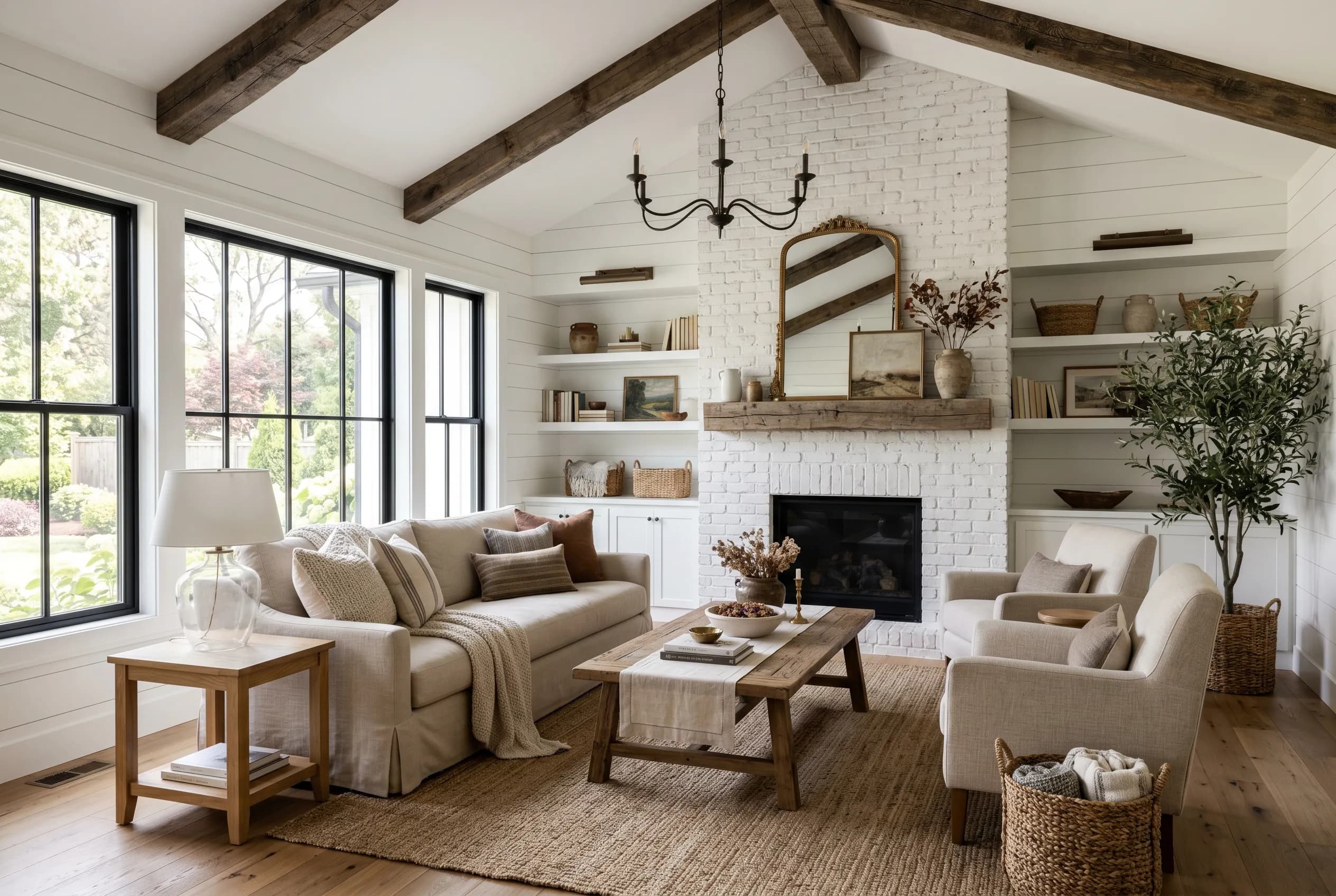
Farmhouse interiors borrow from rural American and European country homes, where rooms were built around the hearth, the kitchen table, and durable furniture meant to last generations. The palette leans toward warm whites and creams, grounded by aged wood and black iron hardware. Texture does the heavy lifting: nubby linen, galvanized metal, woven baskets, and chipped paint that looks earned. Nothing is glossy, and nothing tries too hard.
Living in a Farmhouse room feels unhurried. It suits people who want a home that welcomes muddy boots and crowded dinners without flinching, and it shines in open kitchens and gathering spaces where a long table can anchor the floor. The modern version pares back the country clutter, keeping the warmth but giving each piece room to breathe.
The style traces back to centuries-old working farmhouses across Europe and rural America, where practicality dictated every choice: sturdy farmhouse tables for big families, deep apron-front sinks for washing produce, and open shelving so tools stayed within reach. Its current popularity owes a great deal to Joanna and Chip Gaines, whose Waco, Texas renovations on "Fixer Upper" in the 2010s turned shiplap, sliding barn doors, and reclaimed wood into a national look now often called Modern Farmhouse.
What Defines Farmhouse Design
Warm neutral base
Creamy whites, soft greige, and oatmeal tones set a calm backdrop. Color shows up in worn wood and a few muted accents rather than bold paint.
Aged and reclaimed wood
Beams, plank floors, and barnwood tables carry visible grain and honest wear. The wood is usually matte and often left or limed rather than high-gloss.
Black iron accents
Matte black hardware, gooseneck faucets, and wrought-iron fixtures add contrast and a hint of the utilitarian past against the pale walls.
Shiplap and beadboard
Horizontal plank paneling and beadboard add architectural texture, most often painted white to keep walls bright but tactile.
Practical, sturdy furniture
Pieces look built to be used: a substantial dining table, a deep slipcovered sofa, ladder-back chairs, and open shelving over closed cabinetry.
Vintage and handmade touches
Enamelware, stoneware crocks, woven baskets, and flea-market finds give the room a collected-over-time feel instead of a showroom one.
Farmhouse Color Palette
Warm White
#F4EFE6
Soft Greige
#C9BDA8
Weathered Oak
#9A7B53
Sage
#8A9A7B
Wrought Iron Black
#2B2622
Signature Materials
- Reclaimed and barn wood
- Shiplap and beadboard paneling
- Galvanized and wrought iron metal
- Natural linen and cotton ticking
- Stoneware and enamelware
- Jute and woven seagrass
- Honed or soapstone counters
- Distressed painted finishes
Pieces That Define It
- Long reclaimed-wood farmhouse table
- Apron-front (farmhouse) sink
- Slipcovered linen sofa
- Sliding barn door
- Open wood shelving with iron brackets
- Ladder-back or windsor chairs
- Galvanized buckets and woven baskets
Get a Farmhouse Room in Seconds
Snap or LiDAR-scan the room you want to change, pick Farmhouse from InteriorLab's 19 styles, and the AI redesigns the space in seconds with warm whites, reclaimed wood, and the hardworking details the look depends on. From there you can refine specific pieces, highlight the kitchen counters to swap in a butcher-block top, recolor the cabinets to a soft sage, or Magic Erase a piece that crowds the room. Use Furniture Fit to preview a real farmhouse table in AR at true scale before you commit, then Shop the Room to find the linen sofa or apron sink that completes the look, with the Budget Planner keeping the whole scheme within range.
Tips for Nailing the Farmhouse Look
Mix wood tones on purpose
Farmhouse warmth comes from variety, not a matched set. Pair a darker reclaimed table with paler oak floors and a stained beam so the room reads collected rather than catalog-bought.
Let one surface go raw
Keep most walls a soft white, then give a single plane real texture: a shiplap accent wall, an exposed brick chimney, or a beadboard ceiling. The contrast is what stops the neutral palette from feeling flat.
Choose function-forward pieces
Reach for items that look like they earn their keep, like a butcher block, open shelving, and a sturdy bench instead of delicate accent chairs. Slipcovered, washable upholstery sells the idea that the room is genuinely lived in.
Best Rooms for Farmhouse Style
Farmhouse Design FAQs
What's the difference between Farmhouse and Modern Farmhouse?
Traditional Farmhouse leans into rustic clutter, ornate vintage finds, and busier patterns, while Modern Farmhouse keeps the warm wood and shiplap but strips back the fuss with cleaner lines and a tighter neutral palette. Modern Farmhouse also pairs the country base with contemporary touches like matte black fixtures and simpler cabinetry.
Does Farmhouse only work in old or rural houses?
No. The look translates well to apartments and new builds because it's about materials and warmth, not the building's age. Painted plank paneling, a reclaimed-wood table, and woven textures can bring the feeling to a city flat without any structural changes.
What flooring suits a Farmhouse room?
Wide-plank wood floors are the classic choice, ideally in a matte or lightly distressed finish that shows grain. Where wood isn't practical, large-format matte tile, brick pavers, or a worn-look engineered plank all read authentically, often softened with a jute or vintage-style rug.
How do I keep Farmhouse from looking like a cliche?
Skip the mass-produced signs and stenciled word art, and lean on genuine texture and a few real vintage pieces instead. Limit the all-white-everything by introducing a muted color like sage or charcoal, and let wood tones and natural light carry the warmth.
Explore related styles
Design your space in Farmhouse style
Download InteriorLab free and redesign any room with AI in seconds.