Rustic Interior Design
Rustic design leans on raw wood, stone, and honest craftsmanship to make a room feel grounded and lived-in. It is the warmth of a mountain lodge brought home, where every surface looks like it has a story.


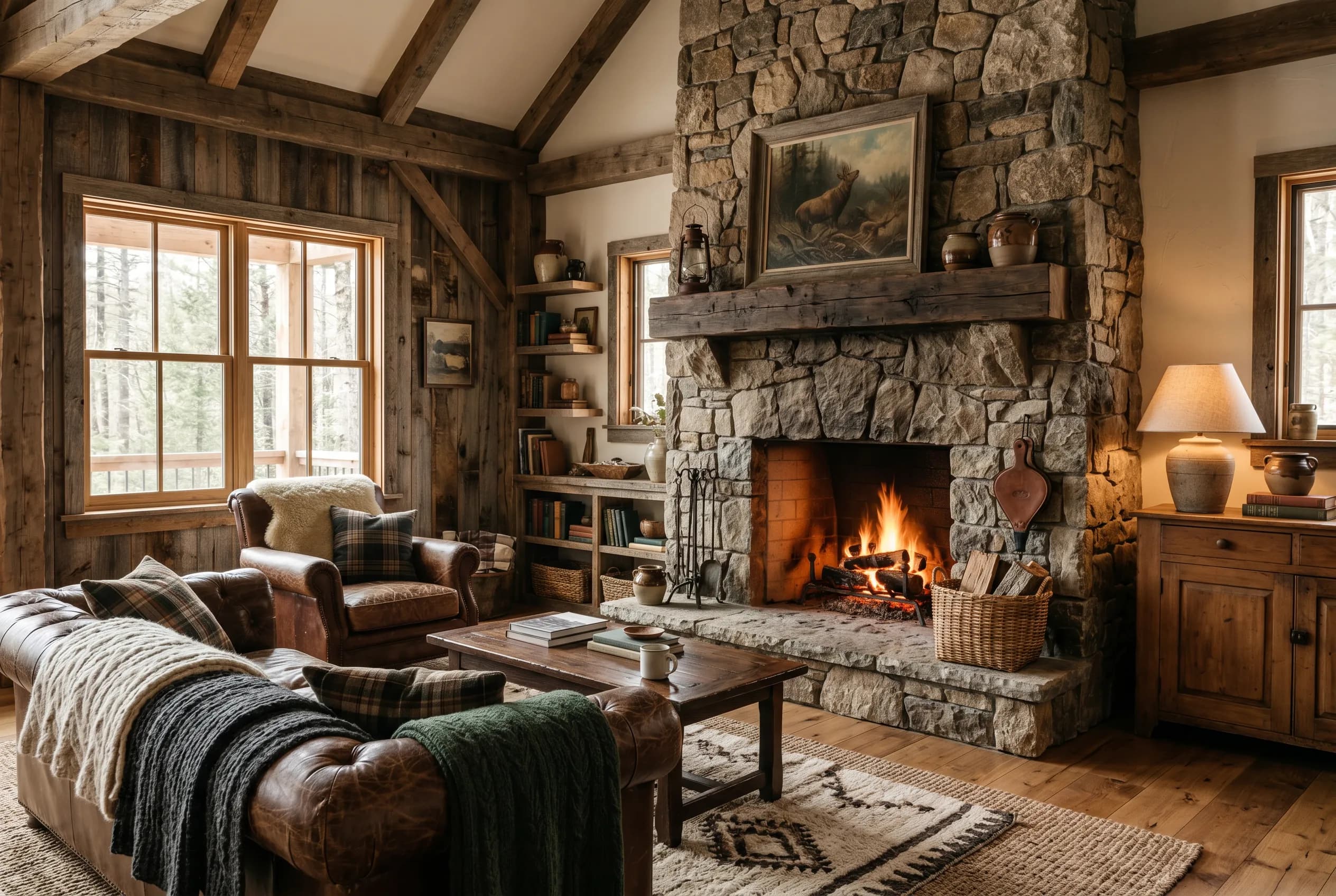
Rustic interiors celebrate natural materials in their roughest, most honest form. Think exposed beams, hand-hewn timber, fieldstone, and metals left to age rather than polish. The palette stays earthy and the textures stay tactile, so a Rustic room reads as warm and unfussy instead of precious. Nothing here pretends to be other than what it is.
Living with Rustic style feels like exhaling. The deep tones and weighty furniture invite you to slow down, and the worn surfaces only look better as they collect scuffs and patina. It works beautifully in cabins, farmhouses, and older homes with good bones, but it also softens a boxy modern apartment that needs more soul. If you want a space that feels sheltering rather than showy, Rustic delivers.
Rustic design traces back to the rural vernacular architecture of Europe and early America, where homes were built from whatever the surrounding land offered: oak timbers, river stone, clay, and iron. The Adirondack Great Camps of the late 1800s pushed it toward a recognizable aesthetic, using twig furniture, antler accents, and unmilled logs to bring the forest indoors. That lodge sensibility still anchors the style today.
What Defines Rustic Design
Honest natural materials
Wood, stone, leather, and wrought iron appear in their raw or lightly finished state. Knots, cracks, and saw marks are features, not flaws.
Exposed structure
Ceiling beams, plank floors, and unplastered walls put a home's bones on display. The architecture itself becomes the decoration.
Earthy, muted palette
Colors borrow from the landscape: bark brown, slate gray, moss green, and clay. Saturation stays low so the materials lead.
Handcrafted and weathered
Pieces look made by hand and aged by use. A reclaimed dining table or a forged candleholder carries visible signs of craft.
Generous, grounded scale
Furniture is sturdy and substantial, often oversized. Heavy timber and thick upholstery give the room a sense of permanence.
Rustic Color Palette
Weathered Barnwood
#6B5742
Fieldstone Gray
#8C857B
Moss Green
#5A6347
Terracotta Clay
#B07A53
Oatmeal Wool
#D8CDB8
Signature Materials
- Reclaimed and rough-sawn wood
- Fieldstone and stacked stone
- Distressed full-grain leather
- Wrought iron and blackened steel
- Burlap, jute, and rough linen
- Wool throws and sheepskin
- Unglazed terracotta
- Galvanized and hammered metal
Pieces That Define It
- Reclaimed-wood farmhouse table
- Leather club chair with visible patina
- Wrought-iron chandelier or lantern
- Stone or brick fireplace surround
- Woven wool or jute area rug
- Open timber shelving with iron brackets
- Vintage trunk or barrel side table
Get a Rustic Room in Seconds
Snap a photo of your room or scan it with LiDAR, pick the Rustic style, and InteriorLab redraws the space with reclaimed wood, stone, and warm earth tones in seconds. From there you can refine the details: highlight a glossy coffee table to swap it for a weathered timber one, recolor walls toward clay or moss, or Magic Erase anything too modern for the look. Use Furniture Fit to preview a real leather club chair in your room through AR, and tap pieces in the design to Shop the Room when a forged lantern or wool rug catches your eye.
Tips for Nailing the Rustic Look
Vary your woods
Rustic falls flat when every piece matches. Mix a darker reclaimed table with a paler pine bench and a worn oak floor. The slight clash in tone and grain is what makes the room read authentic rather than catalog-perfect.
Add real texture, not just brown
Layer in materials you can feel: a chunky wool throw, a jute rug, a stone vessel, a leather strap. Texture carries Rustic style far more than color does, and it keeps an earthy palette from going muddy or flat.
Let one element stay raw
Keep at least one surface genuinely unfinished, like a live-edge shelf, exposed brick, or a beam left rough. That single honest element grounds everything else and stops the room from feeling like a polished imitation of the style.
Best Rooms for Rustic Style
Rustic Design FAQs
What is the difference between rustic and farmhouse style?
Farmhouse is the lighter, more refined cousin. It favors painted shiplap, crisp whites, and tidy symmetry, while Rustic stays darker, rougher, and more lodge-like with raw wood, stone, and weathered metal. Rustic embraces imperfection where farmhouse cleans it up.
Can rustic style work in a small city apartment?
Yes, though you have to edit hard. Pick two or three strong natural elements, like a reclaimed-wood console, a leather chair, and a jute rug, rather than loading the room with timber. Keeping walls light and surfaces uncluttered lets the rustic textures breathe in a tight footprint.
What colors should I avoid in a rustic room?
Steer clear of high-gloss brights, cool neon shades, and stark pure white, which fight the earthy, low-saturation palette. If you want contrast, reach for deep charcoal, forest green, or oxblood instead of anything that looks synthetic or candy-colored.
How do I keep rustic from feeling dark or heavy?
Balance the heavy materials with light. Maximize natural daylight, add warm lamps at different heights, and bring in lighter textiles like oatmeal wool or unbleached linen. A few mirrors and some greenery also lift the weight without breaking the rustic mood.
Explore related styles
Design your space in Rustic style
Download InteriorLab free and redesign any room with AI in seconds.