Mediterranean Interior Design
Mediterranean design is the coast distilled into a room: lime-washed walls, terracotta underfoot, and light that feels like late afternoon in Andalusia. It reads relaxed and sun-soaked without trying too hard.


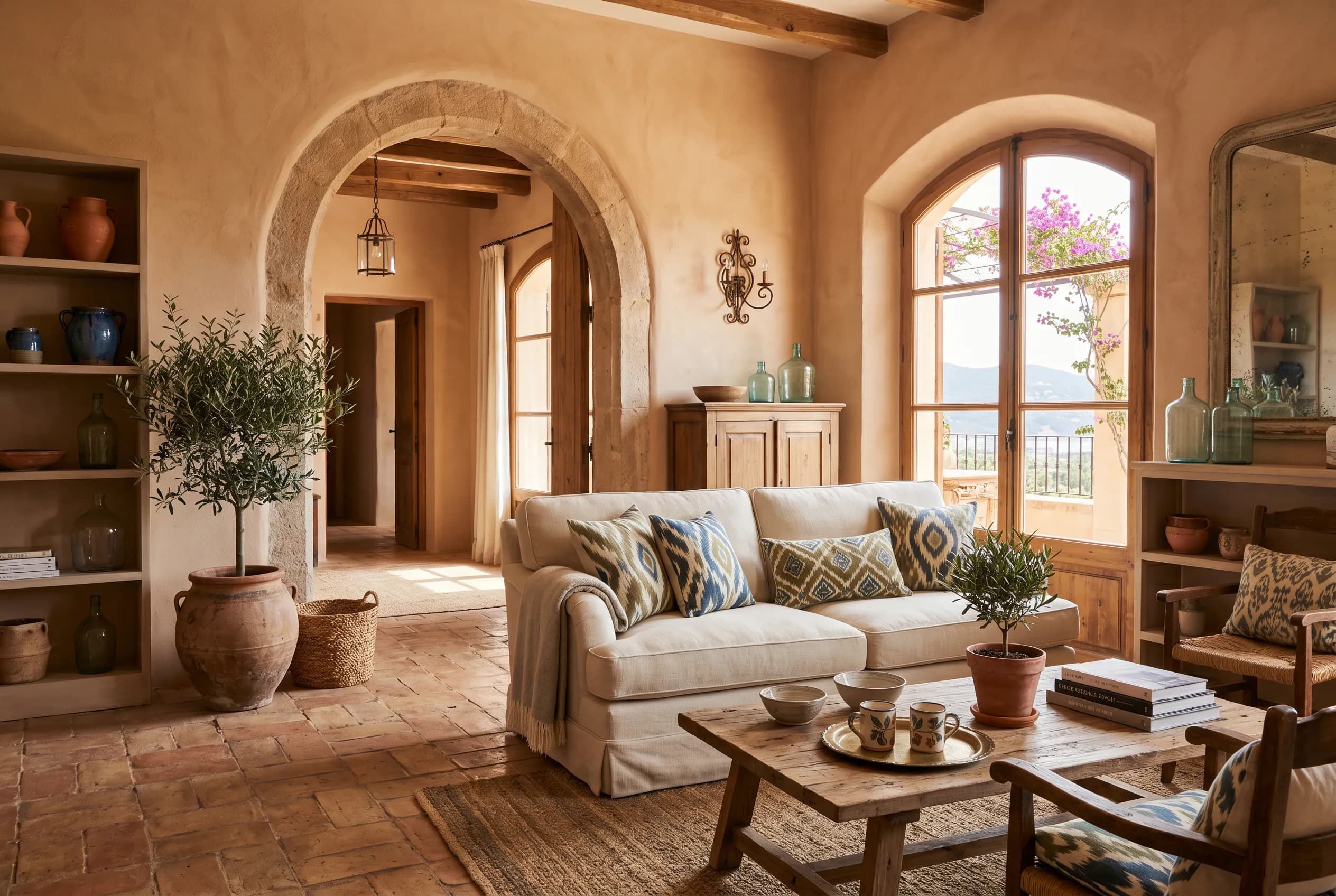
Mediterranean interiors borrow from the homes that ring the sea, from Greece and southern Italy to Spain, Morocco, and the south of France. The look leans on thick plaster walls, earthy clay tones, hand-glazed tile, and a deep respect for natural light. Rooms stay uncluttered but never cold, because every surface carries a little texture and a little age.
Living in a Mediterranean space feels unhurried. The palette is warm and grounded, the materials invite touch, and the indoor-outdoor blur means a room often opens toward a courtyard, balcony, or sun-drenched window. It works best in homes with good natural light and a bit of architectural character, though even a plain apartment can lean into it with the right plaster finish and a few honest, well-worn pieces.
The style grew out of vernacular building across the Mediterranean basin, where thick masonry and lime-washed exteriors were practical answers to heat: pale walls bounce away the sun, and small deep-set windows keep interiors cool. Moorish craft left a lasting mark, especially the geometric zellige tilework of Morocco and southern Spain, while Italian and Greek coastal homes contributed the whitewashed simplicity that defines the look today.
What Defines Mediterranean Design
Lime-washed plaster walls
Walls are finished in chalky, slightly uneven plaster or limewash rather than flat paint, giving them soft depth and a hand-applied texture that catches light.
Earthy, sun-baked palette
Color comes from the landscape: terracotta, ochre, olive, and warm white, often punctuated by a single deep blue drawn from the sea and sky.
Hand-glazed and patterned tile
Zellige, talavera, and other glazed tiles appear on floors, backsplashes, and stair risers, prized for their slight irregularity and depth of color.
Indoor-outdoor flow
Arched doorways, large windows, and courtyards blur the line between inside and out, with greenery and natural light treated as part of the decor.
Honest natural materials
Wrought iron, aged wood, woven rush, and unglazed clay stay close to their raw state, valued for patina rather than polish.
Relaxed, low-key furnishing
Furniture is sturdy and unfussy, often with rounded edges and a lived-in look, arranged loosely so rooms feel calm rather than staged.
Mediterranean Color Palette
Whitewashed Plaster
#F4EDE2
Terracotta
#C26A4A
Olive Green
#7A7A4E
Ochre
#D9A441
Aegean Blue
#3A6E8F
Signature Materials
- Lime-washed plaster
- Terracotta tile
- Glazed zellige tile
- Wrought iron
- Reclaimed and aged wood
- Woven rush and rattan
- Unglazed clay and ceramic
- Natural linen and cotton
Pieces That Define It
- Arched doorways and windows
- Wrought-iron chandelier or lanterns
- Carved wooden console or chest
- Terracotta pots with olive or citrus trees
- Patterned tile backsplash or floor
- Woven rush-seat dining chairs
- Hand-glazed ceramic tableware on open shelves
Get a Mediterranean Room in Seconds
Snap a photo of your room or run a quick LiDAR scan, pick Mediterranean from InteriorLab's style list, and the AI rebuilds the space in seconds with lime-washed walls, terracotta tones, and warm natural light. From there you can refine the details: highlight a cold backsplash to swap in glazed tile, recolor a wall toward ochre, or Magic Erase a piece that fights the mood. Preview a wrought-iron pendant or rush-seat chair in your actual room with Furniture Fit before you commit, then Shop the Room to find the real pieces, with the Budget Planner sorting combinations that hold to your number.
Tips for Nailing the Mediterranean Look
Texture over color count
Keep the palette tight and let surfaces do the work. A limewash finish, an unglazed pot, and a worn wood table create more Mediterranean feeling than adding extra colors. Aim for depth you can see and almost feel.
Use one tile as the anchor
Pick a single patterned tile, a zellige backsplash or a talavera floor, and let it lead the room. Build the rest of the palette around its glaze so the pattern reads as intentional rather than busy.
Bring the outside in
Add a potted olive, lemon, or fig and treat greenery as a core element, not an afterthought. Maximize natural light and keep window treatments sheer so the room stays sun-washed through the day.
Best Rooms for Mediterranean Style
Mediterranean Design FAQs
What is the difference between Mediterranean and coastal style?
Coastal style is light, breezy, and blue-and-white, built around the beach and a cooler palette. Mediterranean is warmer and earthier, grounded in terracotta, ochre, and plaster, with old-world materials like wrought iron and glazed tile. Both love natural light, but Mediterranean feels more rustic and sun-baked than crisp and nautical.
What colors define a Mediterranean room?
Start with a warm whitewashed base, then layer earth tones: terracotta, ochre, and olive green. A single deep blue, drawn from the Aegean, works as an accent on a door, tile, or textile. The goal is a palette that looks pulled from sun, soil, and sea rather than a paint chip.
What flooring suits Mediterranean interiors?
Terracotta tile is the classic choice, warm underfoot and full of natural variation. Patterned glazed tile, such as talavera or zellige, works well in kitchens, entryways, and on stair risers. Aged wood and natural stone are also at home, as long as the finish reads honest rather than glossy.
Can Mediterranean style work in a small apartment?
Yes. The look depends more on texture and palette than on grand architecture, so a limewash wall finish, a few clay and rush pieces, and one patterned tile detail can carry it. Keep furniture low and uncluttered, lean into natural light, and add a potted plant or two to capture the indoor-outdoor feel.
Design your space in Mediterranean style
Download InteriorLab free and redesign any room with AI in seconds.