Luxury Interior Design
Luxury design is restraint with the volume turned up: deep materials, generous proportions, and a few pieces that command the whole room. It should feel composed, quiet, and unmistakably expensive.


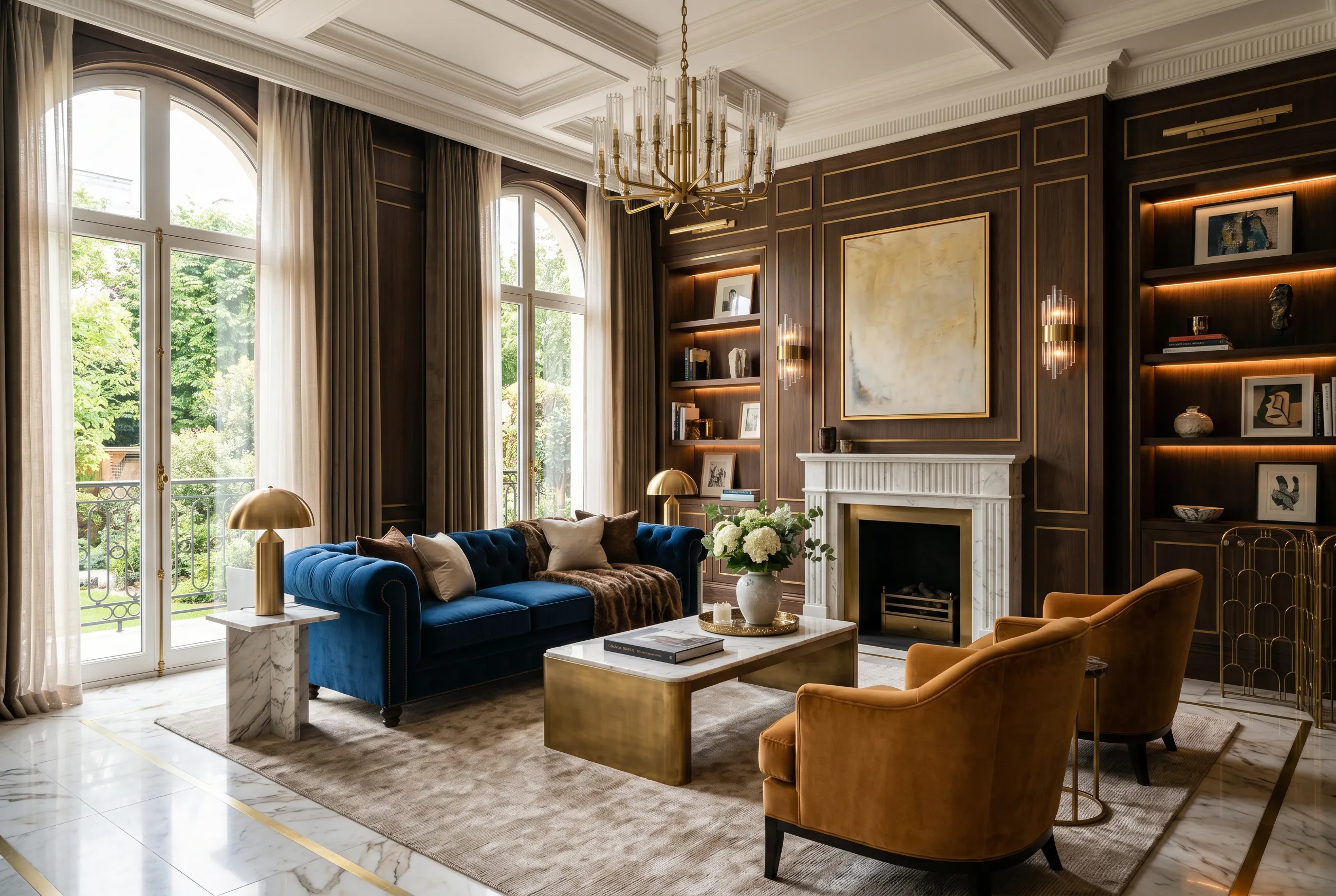
Luxury interiors are built on quality you can feel before you can name it. Surfaces are real rather than printed, proportions are slightly more generous than you expect, and nothing looks rushed or off-the-shelf. The look leans on a tight, tonal palette so that materials, not colors, do the talking.
Living in a luxury room is a calmer experience than the word suggests. There is space to move, light is layered instead of flooded from a single fixture, and the eye lands on one or two confident pieces rather than a crowd of objects. It works best in rooms with good ceiling height and natural light, where stone, brass, and velvet have room to breathe.
The modern luxury interior traces back to the French Beaux-Arts and the grand salons of 18th-century Paris, then runs through the Art Deco glamour of the 1920s and the polished, materials-forward rooms of mid-century designers like Jean-Michel Frank, whose pale plaster walls and shagreen surfaces still define high-end interiors today. Contemporary luxury borrows that emphasis on craftsmanship and rare materials while trading ornament for clean, architectural lines.
What Defines Luxury Design
Tonal, restrained palette
Color stays quiet and close in value so the room reads as one cohesive envelope. Drama comes from material and contrast in finish, not from bright hues.
Real, tactile materials
Genuine marble, solid brass, hardwood, and natural stone are non-negotiable. The hand and weight of a surface is where the luxury actually lives.
Statement focal pieces
One sculptural sofa, a veined marble fireplace, or a large chandelier anchors the room. Everything else supports that single hero.
Layered lighting
Ambient, task, and accent layers work together, often on dimmers. A single overhead light is the fastest way to flatten an otherwise rich room.
Generous negative space
Pieces are given room to be seen. Clutter and crowding undercut the sense of ease that makes a space feel expensive.
Metallic and reflective accents
Polished brass, antique mirror, and glass catch light and add depth without adding bulk or color.
Luxury Color Palette
Warm Ivory
#F4EFE6
Greige
#B6ABA0
Espresso Brown
#3B2F2A
Charcoal
#2B2B2E
Antique Brass
#B08D57
Signature Materials
- Veined marble
- Polished and brushed brass
- Silk and mohair velvet
- Lacquered and burled wood
- Full-grain leather
- Antiqued mirror and glass
- Natural stone
- Plaster and limewash walls
Pieces That Define It
- Tufted or curved velvet sofa
- Marble-topped coffee or console table
- Sculptural statement chandelier
- Brass or gilt-framed mirror
- Floor-to-ceiling drapery in heavy fabric
- Oversized abstract or framed art
- Wing or accent chair in leather
Get a Luxury Room in Seconds
Open InteriorLab, snap a photo of your room or LiDAR-scan it, and pick the Luxury style. The AI redesigns the whole space in seconds with richer materials, layered lighting, and a stronger focal point. From there you can refine individual items: highlight the sofa to swap it for tufted velvet, recolor a wall to a deeper tone, or use Magic Erase to clear clutter that cheapens the look. Preview a marble console or accent chair in your actual room with Furniture Fit AR before you commit, and use Shop the Room to find real pieces that match the redesign.
Tips for Nailing the Luxury Look
Spend on the hero, save on the rest
Luxury reads through one or two genuinely good pieces, not everything. Put the budget into a marble surface or a great sofa, and keep the supporting cast simple so the hero stands out.
Build light in layers
Replace any single overhead fixture with a mix of ambient, table, and accent lighting on dimmers. Warm light at multiple heights is what gives stone and brass their depth at night.
Stay tonal and let texture do the work
Keep colors close in value and contrast through finish instead, like matte plaster against polished brass. A tight palette makes inexpensive elements look more expensive.
Best Rooms for Luxury Style
Luxury Design FAQs
What separates luxury design from just expensive decor?
Luxury is about restraint and real materials, not price tags. A room with a few genuine, well-proportioned pieces and layered light reads as luxury, while a space crammed with costly but unrelated objects rarely does. Editing is as important as buying.
Can I get a luxury look on a modest budget?
Yes, by concentrating spend on one focal point and faking the rest convincingly. Limewash or plaster-look paint, brass hardware swaps, heavy off-the-rack drapery, and good lighting deliver most of the effect for a fraction of the cost. InteriorLab's Budget Planner can find combinations that hit the look within a set number.
What colors work best for a luxury interior?
Warm neutrals like ivory, greige, and espresso form the base, with charcoal or deep navy for grounding and brass or gold as the metallic accent. The key is keeping the palette tight and tonal so materials provide the contrast rather than competing colors.
Is luxury design the same as glam or Art Deco?
They overlap but are not identical. Glam leans harder into shine, mirror, and high-contrast drama, while Art Deco adds geometric pattern and bold symmetry from the 1920s. Contemporary luxury is quieter and more architectural, using rich materials with cleaner lines.
Explore related styles
Design your space in Luxury style
Download InteriorLab free and redesign any room with AI in seconds.