Mid-Century Modern Interior Design
Clean lines, warm walnut, and a few unapologetic pops of color. Mid-Century Modern is the rare look that feels both relaxed and intentional, like a room that already knows what it wants to be.


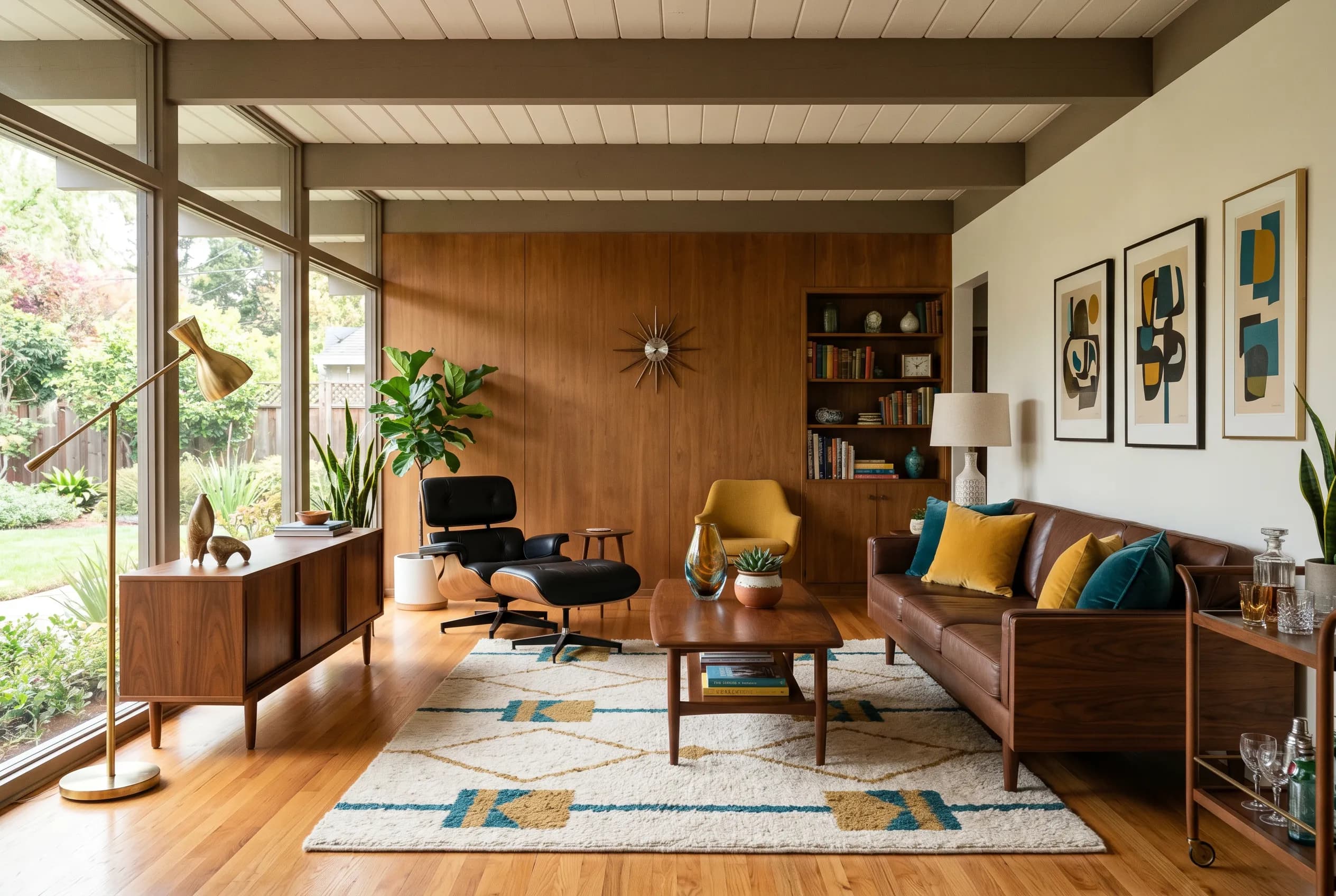
Mid-Century Modern is the design language that grew out of the optimism of the 1950s and 60s: honest materials, functional forms, and an easy relationship between indoors and out. Furniture sits low and light, often raised on tapered or splayed legs so the floor reads as continuous space. Ornament is stripped away in favor of sculptural silhouettes, while organic curves soften the geometry. The result feels modern without feeling cold.
Living with the style is comfortable in a way that surprises people who expect midcentury to be precious. A walnut sideboard, a low-slung sofa, and one good lamp do most of the work, so rooms stay open and uncluttered. It rewards restraint and a single confident gesture, which makes it forgiving for small homes and apartments. It also plays well with whatever you already own, since the era prized objects that earned their place.
The style emerged in the United States and Scandinavia roughly between 1945 and 1969, shaped by postwar manufacturing, new materials, and Bauhaus ideas carried over by emigre designers. Charles and Ray Eames pioneered molded plywood and fiberglass; Eero Saarinen designed the pedestal Tulip chair to clear the "slum of legs" under tables; George Nelson and Florence Knoll defined the look of the modern American office and home. The 1948 Case Study Houses in California, with their post-and-beam construction and walls of glass, set the template for the indoor-outdoor living the era is still loved for.
What Defines Mid-Century Modern Design
Clean, functional lines
Forms are pared down to their essentials, with nothing decorative that does not also serve a purpose. The honesty of the construction is part of the appeal.
Tapered and splayed legs
Sofas, chairs, and case goods float on slim wooden or hairpin legs. Lifting furniture off the floor keeps even a full room feeling airy.
Organic and sculptural shapes
Hard geometry is balanced by softer, almost biomorphic curves, like the shell of an Eames chair or a kidney-shaped coffee table.
Warm woods, especially walnut and teak
Rich, grainy hardwoods anchor the palette and give the cooler tones somewhere warm to land.
Bold accent color used sparingly
A mustard sofa or a burnt-orange chair carries the room while everything around it stays quiet. The drama comes from one decision, not ten.
Indoor-outdoor flow
Large windows, low furniture, and a connection to greenery echo the California glass houses where the style took hold.
Mid-Century Modern Color Palette
Walnut Brown
#5C4433
Mustard Yellow
#D4A017
Burnt Orange
#C85A2C
Avocado Green
#6B7B3A
Warm Cream
#EDE6D6
Signature Materials
- Walnut and teak hardwood
- Molded plywood
- Fiberglass and molded plastic
- Polished and brushed brass
- Wool tweed and bouclé upholstery
- Smoked and clear glass
- Cane and rattan webbing
- Terrazzo and travertine stone
Pieces That Define It
- Walnut credenza or low sideboard
- Molded shell lounge chair
- Egg-shaped or pedestal accent chair
- Sputnik or starburst light fixture
- Kidney-shaped or three-legged coffee table
- Arc floor lamp
- Geometric or shag area rug
Get a Mid-Century Modern Room in Seconds
Open InteriorLab, snap a photo of your room or scan it with LiDAR, and choose Mid-Century Modern from the 19 styles. In seconds the AI restyles the whole space, dropping in walnut tones, tapered-leg furniture, and one well-placed accent color while keeping your room's actual proportions. If the sofa is not quite right, highlight it and swap, recolor, or remove it; you can also Magic Erase anything that breaks the line. Preview a real lounge chair in place with Furniture Fit in AR before you commit, and where pieces link to real products you can Shop the Room or hand the look to the Budget Planner to find a combination that fits your number.
Tips for Nailing the Mid-Century Modern Look
Let one color do the talking
Pick a single bold accent, such as mustard, teal, or burnt orange, and repeat it in two or three places. Keep the rest of the room in walnut, cream, and warm neutrals so the color reads as a choice rather than a clash.
Buy for the legs
Furniture that sits up on slim tapered or hairpin legs is what makes a room read as midcentury, not just retro. Visible floor under the sofa and console keeps the whole space feeling lighter and more open.
Anchor with real wood grain
One genuine walnut or teak piece, like a credenza, sets the tone for everything else. Without that warmth, the clean lines can tip into looking sterile, so spend on the wood and stay simpler elsewhere.
Best Rooms for Mid-Century Modern Style
Mid-Century Modern Design FAQs
What is the difference between Mid-Century Modern and modern design?
Modern is a broad movement built on minimalism and industrial materials, while Mid-Century Modern is the specific postwar slice of it, roughly 1945 to 1969. The midcentury version is warmer and more organic, leaning on walnut, tapered legs, and sculptural curves rather than the cooler steel-and-glass feel of strict modernism.
Is Mid-Century Modern still in style?
Yes, and it has stayed in style longer than most trends because the forms are genuinely functional and timeless. Originals by Eames, Saarinen, and Nelson are still in production, and the low, leggy, uncluttered look suits today's smaller homes well. It also mixes easily with other styles, which keeps it from feeling dated.
What colors define a Mid-Century Modern room?
The base is warm and neutral: walnut brown, cream, and soft tan. Against that, the era used confident accents like mustard yellow, burnt orange, avocado green, and teal. The trick is using those bold tones sparingly so one or two carry the room instead of competing.
Does Mid-Century Modern work in a small apartment?
It works especially well. Low furniture on slim legs leaves sightlines open and floor visible, so a small room reads as larger. The style's bias toward a few well-made pieces over lots of stuff also fits apartment living, where every object has to earn its footprint.
Explore related styles
Design your space in Mid-Century Modern style
Download InteriorLab free and redesign any room with AI in seconds.