AI Kids' Room Design
A kids' room has to be three things at once: a place to sleep, a place to play, and a place to think. The best ones leave room to grow without needing a full redo every couple of years.


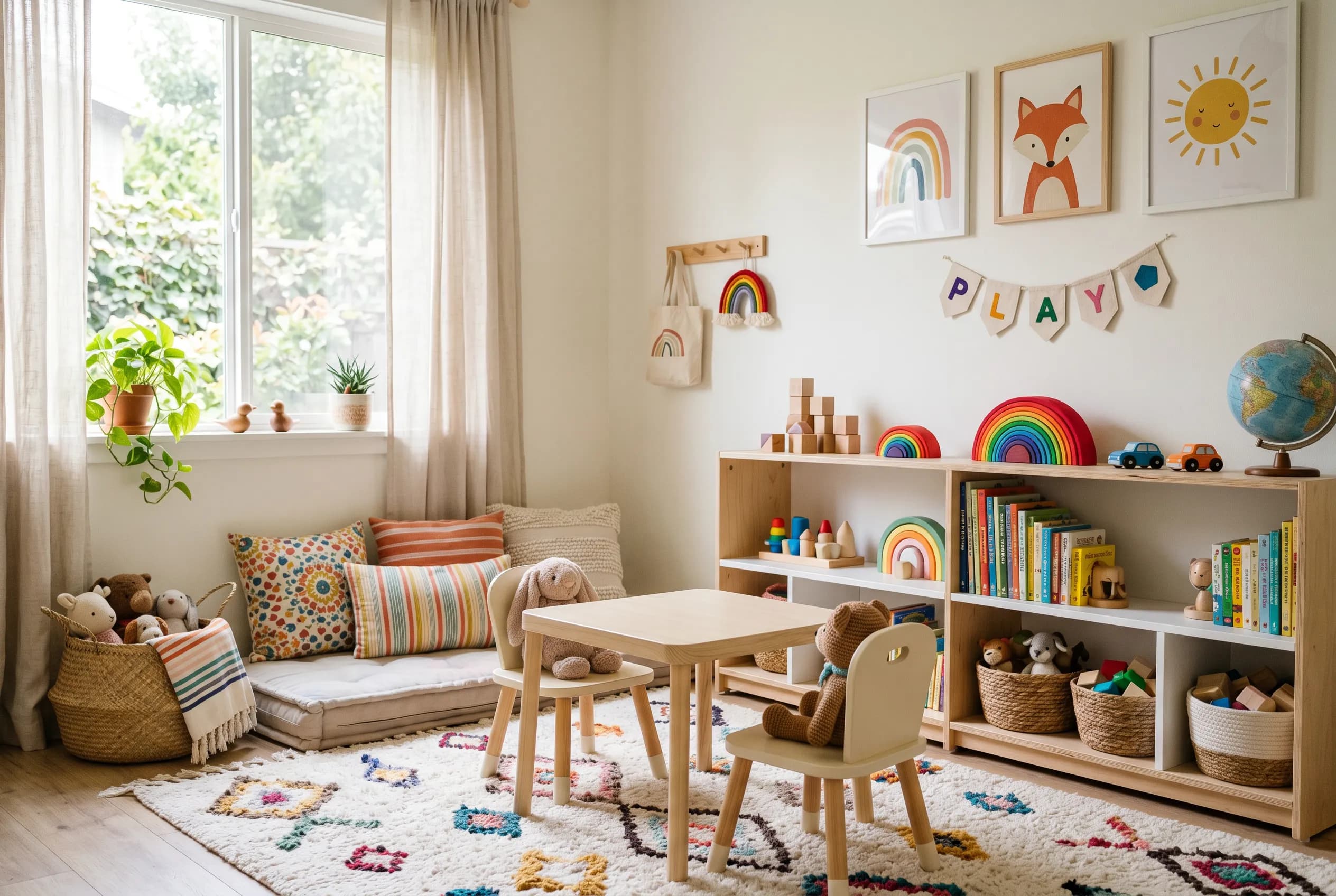
A kids' room is the most fast-changing space in a home. A nursery becomes a toddler's playroom, then a grade-schooler's homework zone, then a tween's retreat, often inside the same four walls. Good design plans for that arc instead of fighting it: durable surfaces, washable finishes, and furniture that adapts rather than ages out. Color and pattern carry the personality, but the bones underneath should be calm enough to repaint or restyle as tastes shift.
Layout is really about zoning. Most rooms break into three jobs, sleep, play, and study, and the trick is keeping them legible without walls. A bed anchored against one wall, an open floor area for play, and a desk or activity table near the window covers the basics. Storage is the hardest-working element of all: low, open bins a young child can reach, plus higher closed shelving for parents, so the room can be reset in five minutes instead of fifty.
Common Kids' Room Design Challenges
Designing for a moving target
What a four-year-old wants and what a ten-year-old wants are different rooms. Picking pieces that flex, a convertible bed, modular shelves, a neutral rug, saves you from re-buying everything every few years.
Storage that a child can actually use
Toys end up on the floor when the storage is built for adults. Low open bins, labeled drawers, and shelves at kid height turn cleanup into something a child can manage alone.
Color and stimulation balance
Bright primaries are fun but can feel busy and over-stimulate at bedtime. The usual fix is a calm base palette with saturated color in the easy-to-swap layers like bedding, art, and a rug.
Safety in a small footprint
Tall dressers, cords, and sharp corners are real hazards in a room where kids climb and roam. Anchored furniture, rounded edges, and clear floor space have to be designed in, not added later.
Redesign Your Kids' Room With AI
With InteriorLab, redesigning a kids' room starts with one photo of the real space, or a LiDAR scan if your device supports it. Pick from 19 styles and the AI restyles the whole room in seconds while keeping its actual dimensions, so you see how a Scandinavian or boho scheme would land in your room, not a stock one. From there you can edit specific pieces: highlight a bulky dresser to recolor it, Magic Erase outgrown furniture, or swap a busy rug for something calmer. Use Rearrange to test new sleep, play, and study zones without moving anything, and Furniture Fit to preview a real bunk bed or desk in AR before it arrives. Shop the Room links many pieces to products you can actually buy, and the Budget Planner finds combinations that fit a set spend, useful for a room you expect to update again in a couple of years.
Kids' Room Design Tips
Zone the room before you decorate it
Decide where sleep, play, and study live before picking colors. A rug can mark the play area, a desk by the window defines homework, and the bed anchors the rest. Clear zones make a small room feel bigger and help a child know where things belong.
Put the bold color where it is easy to change
Keep walls and large furniture in calm, repaintable tones, and load the personality into bedding, wall art, cushions, and a rug. When your child's favorite color flips from dinosaurs to space, you swap a few soft items instead of repainting and rebuying.
Choose furniture that grows up
A convertible crib, a desk that raises, and modular shelving stretch across years instead of a single phase. Loft and bunk beds free up floor space for play in tight rooms. Spending more on adaptable core pieces usually costs less than replacing a themed set every two years.
Kids' Room Design FAQs
What is the best layout for a small kids' room?
Push the bed into a corner or against the longest wall to open up floor space for play, which matters more to a child than a centered bed. A loft or bunk bed reclaims the area underneath for a desk or reading nook. Keep the center of the room clear and run storage up the walls rather than out into the floor. In InteriorLab you can use Rearrange to test these layouts on a photo of your real room before moving a thing.
How do I design a kids' room that lasts as they grow?
Keep the permanent elements, wall color, flooring, and big furniture, neutral and timeless, then express age and personality through bedding, art, and accessories that are cheap and quick to change. Choose convertible and modular furniture that adapts to new needs. This way the room evolves in stages rather than demanding a full overhaul every couple of years.
What colors work best in a kids' room?
There is no single right answer, but a calm base with controlled pops tends to wear best. Soft neutrals, muted greens, warm whites, or pale blues keep the room from feeling chaotic, while saturated color comes in through swappable accents. If sleep is a struggle, lean cooler and quieter near the bed and save the brighter tones for the play zone.
Can InteriorLab design a shared kids' room?
Yes. Photograph the room and use Rearrange to test two-bed and bunk-bed layouts that give each child a defined zone. You can edit individual pieces, recolor one bed, swap a rug, Magic Erase clutter, so the space reads as shared but personal. Furniture Fit then lets you preview a real bunk bed or twin beds in AR to confirm they fit before buying.
Redesign another room
Redesign your kids' room today
Download InteriorLab free and see your new space in seconds with AI.