AI Hallway Design
The hallway is the first thing you see coming home and the last thing guests pass on the way out. It deserves more than a coat hook and a forgotten stretch of wall.


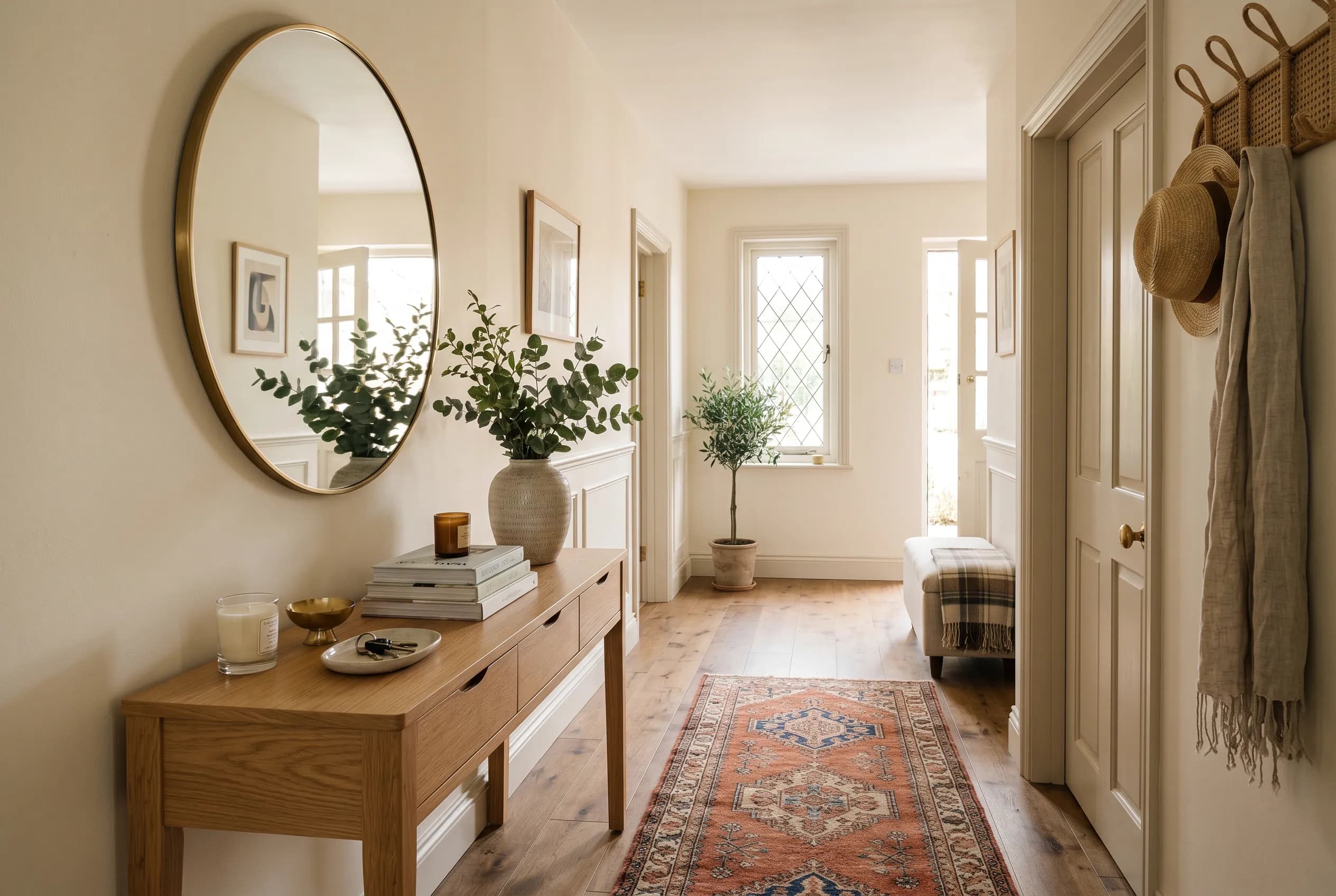
A hallway is connective tissue. It links rooms, carries foot traffic, and sets the tone for everything beyond it, yet it is almost always the last space anyone decorates. Most hallways are long, narrow, and short on daylight, which is exactly why thoughtful design pays off here: the right paint, lighting, and floor treatment can turn a dark passage into a space that feels intentional rather than left over.
Function comes first in a corridor, because the space is defined by movement through it. The usable depth is rarely more than a foot or two along each wall, so furniture has to be shallow, storage has to go vertical, and the floor needs to stay clear enough for two people to pass. Within those limits there is real room to make a statement, whether that means a runner that draws the eye down the length, a gallery wall that gives the journey something to look at, or a single console that anchors the entry.
Common Hallway Design Challenges
Narrow width
Most hallways are too tight for standard-depth furniture. Pieces need to be slim, wall-hugging, or recessed so the walkway stays clear and the space does not feel pinched.
Little or no natural light
Interior corridors often have no windows at all, leaving them dim and cave-like. Color choice and layered artificial lighting do the work that daylight cannot.
Awkward length and proportion
A long, blank hallway can read like a tunnel. Without visual stopping points along the way, the eye races to the far end and the space feels like dead transit.
Heavy wear and clutter
Hallways absorb scuffs, dropped bags, shoes, and mail. Durable finishes and built-in storage keep a high-traffic route from sliding into a dumping ground.
Redesign Your Hallway With AI
With InteriorLab, redesigning a hallway starts with a single photo, or a LiDAR scan if your device supports it. Because corridors are awkward to picture finished, seeing the change is half the battle: pick any of the 19 styles and the AI restyles the whole run in seconds while keeping your actual proportions, doorways, and floor line. From there you can target individual elements, highlighting a dated runner to swap its pattern, recoloring the walls to test a darker, cozier scheme, or using Magic Erase to clear a cluttered console and start fresh. When a layout works, Furniture Fit lets you preview a slim bench or narrow console in AR to confirm it fits before buying, and Shop the Room links many of the pieces to products you can actually purchase.
Hallway Design Tips
Light the length, not just the ceiling
A single overhead fixture leaves a hallway flat and shadowy. Add wall sconces or picture lights at intervals, or a row of recessed downlights, so the eye has something to follow and the space feels longer and more deliberate.
Use a runner to direct the eye
A long runner pulls the gaze down the corridor and visually stretches it, while protecting high-traffic flooring underneath. Keep a few inches of floor showing on each side, and choose a pattern with some length to it rather than a busy all-over print.
Go vertical with storage and mirrors
Floor space is precious, so build up the walls instead. Wall-mounted hooks, a slim shelf, and a tall mirror add function without narrowing the path, and a well-placed mirror bounces light into the darkest stretch.
Best Styles for a Hallway
Hallway Design FAQs
What is the best color for a dark, windowless hallway?
You have two strong options. A bright off-white or warm pale neutral reflects the most artificial light and keeps a tight corridor feeling open. Alternatively, lean into the lack of daylight with a deep, saturated color like ink blue or forest green, which makes a windowless hallway feel intimate by design rather than dim by accident. Try both in InteriorLab before committing.
How do I make a narrow hallway look wider?
Keep furniture shallow and against one wall, run flooring or a runner along the length to lead the eye, and hang a large mirror to double the apparent width. Light, low-contrast walls open the space up, and consistent flooring between the hallway and adjoining rooms blurs the boundaries so the corridor reads as part of a larger whole.
What furniture actually fits in a hallway?
Stick to slim, shallow pieces: a console table under twelve inches deep, a narrow bench for putting on shoes, wall hooks instead of a freestanding coat rack, and a tall thin mirror. Anything that projects far into the walkway will feel cramped. Use Furniture Fit to preview a piece in AR and confirm the clearance before you buy.
Can I use a gallery wall in a hallway?
A hallway is one of the best places for a gallery wall, because it gives people something to look at as they move through and breaks up a long blank run. Keep frames in a consistent palette so the grouping reads as one feature, and hang the centerline at eye level since most viewing happens while walking past rather than standing still.
Redesign another room
Redesign your hallway today
Download InteriorLab free and see your new space in seconds with AI.